MLB

Quick! Everybody Freak Out!

It’s a debacle. It’s a catastrophe. It’s a calamity of unseen proportions. The Boston Red Sox are back to where they left off last September, featuring 10-0 shutouts, blown 9-0 leads, and a team ERA of 6.68–more than a full run higher than the next worst team. Bobby V’s Red Sox are 4-10 to start the season–and it’s never going to get better.

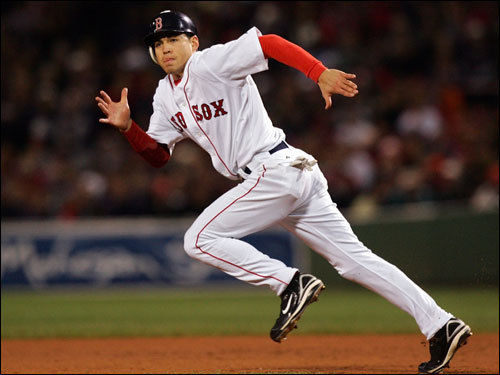
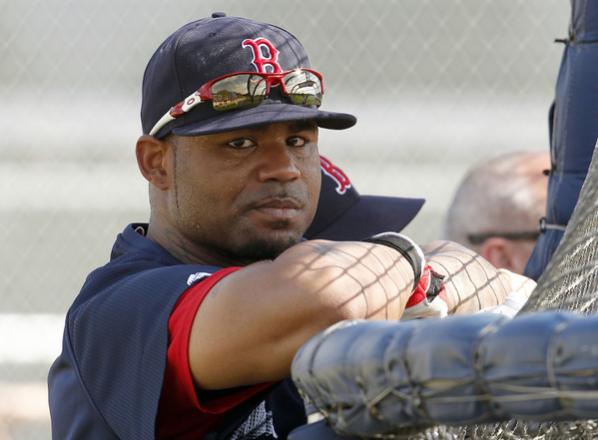
It’s a season that was seemingly destined to fail. Near-MVP Jacoby Ellsbury suffered a freak injury when Rays’ shortstop Reid Brignac fell onto his shoulder, and now he’s out for two months. Fellow outfielder Carl Crawford, poised for a comeback after last year’s forgetful season, is still recovering from his January wrist surgery. Now? Now the team is staring at unsavory permutations of Cody Ross, Ryan Sweeney, Marlon Byrd, Darnell McDonald, and Lars Anderson roaming Fenway’s outfield.

Even the bullpen, once a strength of the Red Sox, is imploding. The two big pickups–Andrew Bailey and Mark Melancon–have done nothing to help the team. Bailey is, once again, injured and out for most the season, while Melancon has an unimaginably high 49.50 ERA, and has since been optioned to AAA Pawtucket. Alfredo Aceves, the new closer, has already blown two saves en route to a 24.00 ERA.

The team chemistry was bad last year, but now it’s soured from bad to worse. They’re not even a loose, fun-loving team with beer and fried chicken like last year; now they’re uptight with a new manager who calls out players, always needing to be in the center of attention. I wasn’t just wrong about this team being a World Series contender, I was wrong about them being a winning team.

Fire the manager; fire the pitching coach; nothing’s going right. The vaunted top of Boston’s rotation (Beckett, Lester, and Buchholz) has a 7.52 ERA to match a 1.45 WHIP. Even the formerly-frightening lineup has become far from formidable–just look at Kevin Youkilis hitting .190 on the year. From the look of things, there won’t be much improvement on the horizon. This is an unmitigated disaster; Boston sports will never be the same.

Or maybe, just maybe, we’re overreacting a bit.

There’s no excuse for the way the Red Sox opened the season, but there are some solid explanations. A team this talented should never win well under a third of their games, but let’s not forget they faced a hellish schedule to start the year. Five teams with a combined winning percentage of .641, to be exact. The Tigers. Blue Jays. Rays. Rangers. Yankees. That sounds like a playoff preview, if you ask me.

Contrary to popular belief, the Red Sox offense remains elite (top-10 in runs scored), and Carl Crawford hasn't even returned yet.

I don’t mean to defend this terrible start, but things will turn around. Youkilis won’t finish the year with a .271 OBP. Beckett, Lester, and Buchholz will each have ERAs well under 4. And while Bobby V’s antics may never end, he’s not the reason the bullpen is pitching so poorly.

Just like the 12-4 Washington Nationals will fall back to Earth–regression towards the mean, in case you didn’t know the term–the Red Sox will return to the upper ranks of the AL. And as if it couldn’t have come at a better time, the Sox are about to face the soft underbelly of their schedule. I’m talking about the Twins, White Sox, Athletics, Orioles, Royals, Indians, and Mariners. Twenty-two games against teams with a combined .426 winning percentage.

It’s not time to panic, yet. In fact, it’s never a good thing to panic–that’s when teams make rash decisions. Crawford will return soon, the pitching will even out, and the Red Sox should be back above .500 by the end of this 22 game stretch. But if Boston’s outlook still don’t improve, changes need to be made. Not major changes, but card shuffling–like the promotions of Ryan Lavarnway, Alex Wilson, Jose Iglesias, and perhaps Aaron Cook.

The Boston media will never take a lax position like this, but what’s the use of worrying this early in the season? It isn’t the end of the world. The 2007 Yankees started the year 21-29 before coming back to win the Wild Card–tougher turnarounds have happened before. Between the powerful lineup and strength atop the rotation, things will work themselves out because this team is too talented to fail over an entire season.

Categories: MLB | Leave a comment

2012 Baseball Preview

2011 was quite ride, but who knows what’s in store for 2012? Get yourself ready with my 2012 Baseball Preview! For the sixth year in a row, the preview is absolutely free, but all I ask is that you tell a friend about it. Enjoy!


Categories: MLB | Leave a comment

2012 Top 50 MLB Prospects

Categories: MLB | Leave a comment

Introducing the Weighted Net Steal

We’ve seen an absolute array of statistics revolutionized by the sabermetric era of baseball. All sorts of acronyms that confuse the average fan–UZR, wOBA, and FIP–are becoming more and more accepted among baseball communities. But those statistics only cover defense, hitting, and pitching–leaving out one of the major baseball tools. The statistical side of the final segment of baseball (base running) has hardly been changed since Day One when the stolen base stat was drawn up.

As an advanced thinker of baseball, this bothered me. Sure, there was the net steal (simply stolen bases minus times caught stealing) and the newly-christened Ultimate Baserunning, but neither covers the whole story. Net Steals don’t appropriately value the damage done by being caught stealing, and UBR doesn’t even factor in stolen bases.

Many teams–including the much publicized Moneyball Athletics–have stopped trying to steal bases in general. Why? Because the risk is so high, taking an extra base is often a gamble with a low return. Successfully stealing one base in every two tries doesn’t break even, that extra out created ultimately doesn’t justify taking an extra base. Having a man on second is clearly much more valuable than having a man on first, but there is value enough in just having a man on base–without using up one of your 27 outs.

According to studies done by James Click on stealing bases, a runner needs to steal successfully about 73% of the time to break even. Now, this number fluctuates depending on which base is being attempted at and how many outs there are. But the point is that the rate you need to make it into the black is much higher than the previously used 50%.

In simpler terms, this means that for every three times a runner is caught stealing, he needs at least eight stolen bases to not be hurting his team. Even eight out of twelve swipes is a failure. And with that in mind, it gives us the formula for Weighted Net Steals (abbreviated wNS):

wNS = SB – (8/3)CS

Before we break down the leaders in weighted net steals, let’s take a look at the top 10 base stealers of 2011 based on stolen bases:

SB CS wNS
Michael Bourn 61 14 23.67
Coco Crisp 49 9 25.00
Brett Gardner 49 13 14.33
Matt Kemp 40 11 10.67
Emilio Bonifacio 40 11 10.67
Ichiro Suzuki 40 7 21.33
Cameron Maybin 40 8 18.67
Drew Stubbs 40 10 13.33
Jose Reyes 39 7 20.33
Jacoby Ellsbury 39 15 -1.00

From just looking at stolen bases, Michael Bourn is by far the best runner, followed by Gardner, Kemp, and a pack of seven equally good runners. But once you weigh the disadvantage of being caught stealing, the rankings shake up dramatically. Kemp, Bonifacio, and Stubbs fall out of the top 10, and Ellsbury is so inefficient that he receives a negative grade for wNS.

Here are the top twenty base stealers of 2011 based on net steals:

SB CS NS wNS
Michael Bourn 61 14 47 23.7
Coco Crisp 49 9 40 25.0
Brett Gardner 49 13 36 14.3
Ichiro Suzuki 40 7 33 21.3
Jose Reyes 39 7 32 20.3
Cameron Maybin 40 8 32 18.7
Drew Stubbs 40 10 30 13.3
Emilio Bonifacio 40 11 29 10.7
Matt Kemp 40 11 29 10.7
Ryan Braun 33 6 27 17.0
Ian Kinsler 30 4 26 19.3
Jason Bourgeois 31 6 25 15.0
Angel Pagan 32 7 25 13.3
Ben Revere 34 9 25 10.0
Elvis Andrus 37 12 25 5.0
Erick Aybar 30 6 24 14.0
B.J. Upton 36 12 24 4.0
Jacoby Ellsbury 39 15 24 -1.0
Will Venable 26 3 23 18.0
Eric Young 27 4 23 16.3

Net steals are much better than pure stolen bases when it comes to assessing the best base stealers in the game. But as discussed earlier in this article, it doesn’t put enough importance on being caught stealing. Gardner, Stubbs, Bonifacio, Kemp, Andrus, Upton, and Ellsbury were all caught stealing double-digit times, yet they remained in the Top-20. Unfortunately, Net Steals doesn’t exactly measure efficiency for steals, it just slightly penalizes overly-aggressive base stealers.

Here are the top twenty base stealers of 2011 based on weighted net steals:

SB CS wNS
Coco Crisp 49 9 25.0
Michael Bourn 61 14 23.7
Ichiro Suzuki 40 7 21.3
Jose Reyes 39 7 20.3
Ian Kinsler 30 4 19.3
Cameron Maybin 40 8 18.7
Will Venable 26 3 18.0
Craig Gentry 18 0 18.0
Ryan Braun 33 6 17.0
Eric Young 27 4 16.3
Jason Bourgeois 31 6 15.0
Brett Gardner 49 13 14.3
Chase Utley 14 0 14.0
Erick Aybar 30 6 14.0
Drew Stubbs 40 10 13.3
Angel Pagan 32 7 13.3
Gerardo Parra 15 1 12.3
Jordan Schafer 22 4 11.3
Jayson Werth 19 3 11.0
Shane Victorino 19 3 11.0

What we see now is that raw stolen base totals aren’t so important. Craig Gentry cracked the top 10 list, and he didn’t even swipe 20 bases all year. He just was never caught. Will Venable and Eric Young made it in at #6 and #10 respectively, despite only taking 53 bases combined. But they were only caught 7 times all year.

Your strength as a baserunner doesn’t really depend on how many times you steal a base. Runner X who steals 40 bases and gets caught 15 times has the same wNS score as a runner who takes eight bases while getting caught three times. It’s about efficiency.

Weighted Net Steals also somewhat takes a page out of the book of Simpson’s Paradox. The stat doesn’t revolve around just efficiency, or Adrian Gonzalez would be the best baserunner in the league with one steal in one attempt. The aforementioned Craig Gentry may be 18-for-18 in steals, but he’ll get a lower wNS score than Cameron Maybin, who went 40-for-48, since Maybin has stolen many more bases, even after being caught eight times. Of course, the difference between their scores (18 and 18.7) is minute, but it shows that it takes more than never being caught to be a good baserunner.

Base stealing is one of the last fronts in baseball that still has room to grow in terms of advanced stats. But I believe that wNS is a step in the right direction. The stat doesn’t measure speed; home-to-first times are more valuable if that’s what you’re looking for. Rather, wNS shows just how much value a player adds to his team. Each whole number is an extra base added (just like stretching a single into a double), and a score of zero means the player had no impact (positive or negative) on the basepaths.

Is Jacoby Ellsbury an efficient base stealer? In 2011, no. But for his career, very much so.

These values, though, are not meant to be predictive. In fact, they can even fluctuate greatly between seasons. But what they do illustrate is the efficiency of the player’s baserunning.

For example, you can read into Jacoby Ellsbury’s 2011 wNS score of -1 and see a tick-below-average runner. That may be true for last season, but you can’t extrapolate that number to say he’s an average runner overall. In fact, for his career, he’s a wonderfully efficient runner with a career wNS of 71–good for 14.2 per season. Before last season, he posted wNS scores of 4.3, 38, 20.7, and 9.

Some teams have sworn off stealing because of the repercussions of being caught stealing. But that’s not the best strategy. When done efficiently, stealing is an easy way to compensate for a lineup that may be lacking in pop. Maybe that’s why the Moneyball A’s never won anything.

Categories: MLB | Leave a comment

A Christmas Surprise

Silly me, I thought the NFL was played on Sunday. To my surprise, on the way to a 2PM movie, I found out the Panthers were up 10-0 on the Bucs. Huh. How about that. Well let’s jump back in time to Wednesday when I made my Week 16 picks. Home teams in CAPS.

Texans (-5.5) over COLTS
Broncos (-3.5) over BILLS
BENGALS (-4.5) over Cardinals
RAVENS (-13.5) over Browns
Jaguars (+7.5) over TITANS
Raiders (+0.5) over CHIEFS
Rams (+15.5) over STEELERS
PATRIOTS (-10.5) over Dolphins
Vikings (+6.5) over REDSKINS
Giants (+2.5) over JETS
PANTHERS (-7.5) over Buccaneers
Chargers (+2.5) over LIONS
Eagles (+2.5) over COWBOYS
Niners (-2.5) over SEAHAWKS
Bears (+12.5) over PACKERS
Falcons (+6.5) over SAINTS

But all is not lost on the sixth night of Hanukkah, the NBA is back! No more wondering how long before the Pistons get evicted or Chris Paul realizes he’s been traded to the Clippers. Yes, those Clippers. Because the wait is over.

I’m not going to give a 75-page NBA preview like I did for baseball, but I’ll offer a mini-preview for each team.

Eastern Conference:

1. Miami Heat
This team was two games away from winning it all last year without a full to gel. Now they’ve got Shane Battier, a healthy Haslem and Miller, and no Eddie House. With the shortened season, they should be the odds on favorite. Championship or bust. And I think they’ll do just that this year.

2. Chicago Bulls
Adding a real shooting guard in Rip Hamilton will be huge, adding a legitimate scorer for Derrick Rose. The key is Carlos Boozer: when he’s on, they can be the best team in the East, but when he’s playing small they’re the LeBron Cavs. They’re not far behind the Heat, and there’s a huge drop-off from this point on in the East.

3. Boston Celtics
I’m afraid of this pick because of the age of the team and sudden lack of depth–no thanks to Kendrick Perkins, David West, and Jeff Green. But they’ve got the best chemistry in the league, the toughest defense, and the most ubuntu. (You just said teamwork twice… Yeah well I like the word ubuntu). The Celtics will get up for big games but look terrible against the Sixers and Wizards of the NBA.

4. New York Knicks
Tyson Chandler was perhaps the biggest addition of the off-season. While he’s just about the only player who plays defense on the team, New York will clean up in the regular season–baring major injuries. And it’s not like this team is injury prone. Whoops. Remember, New York was 14-14 after the Melo trade. This team is still seriously flawed.

5. Indiana Pacers
As weird as it sounds, the Pacers will be pretty good this year. They’ve got a cadre of effective big men with Roy Hibbert, David West, Beaker, and Jeff Foster along with talented perimeter play from Danny Granger, Paul George, Darren Collison, and George Hill. They’ve still got some cap room, so look for them to add a 2-guard so that Paul George can switch back to his natural position at small forward.

6. Atlanta Hawks
We all know the definition of insanity, right? Doing the same thing over and over, expecting different results. Well how many times do we have to watch the same team? The only difference from last year is they’ve swapped Jamal Crawford for an older, less efficient Tracy McGrady. Yes, they’re fairly young and talented, but without Kirk Hinrich, they’re not going anywhere without shaking up the roster.

7. Orlando Magic
Dwight Howard said he’s leaving, and GM Otis Smith sure isn’t helping out at all. The team is smothered with terrible contracts, even after amnestying Gilbert Arenas, and the big off-season move was swapping Brandon Bass for Big Baby. They need to jump on the Nets’ offer of Brook Lopez and five–yes FIVE–first round picks for Dwight because he’s more done in Orlando than… than… a pie in the oven an hour too long.

8. Milwaukee Bucks
Yeah, yeah, even Jim Rome could have made a better comp than that last one. But back to basketball. Milwaukee addressed some of their offensive problems adding Stephen Jackson, but at the cost of moving out of the top-10 picks of the draft. They’ve got a stud big man, an electric point guard, and solid defense. Good enough to make the playoffs in the East, but not good enough to win 30 games.

9. Philadelphia 76ers
With no additions, I don’t see this team making the playoffs. Evan Turner is not all he was cracked up to be, Jrue Holiday is an average starter at best, and Elton Brand is no longer fit to start the entire season. They’ll need a big step forward from two of Thaddeus Young, Turner, Holiday, and Jodie Meeks to make the playoffs.

10. New Jersey Nets
Before the Brook Lopez injury, the Nets may have been good enough to make the playoffs because of those two players alone. But that notion is long gone. Their best option at this point is to play rookie Marshon Brooks and second-year man Damion James, hoping one will take off. Now, if they land Dwight Howard, this team could be a threat. A threat to make the second round.

11. Washington Wizards
Last year, I foolishly picked this team to make the playoffs based on talent alone. They’ve still got John Wall, Andray Blatche, JaVale McGee, and Nick Young. I just understimated the importance of chemistry and plain ol’ basketball IQ. Or just IQ. In the past year, they’ve added Jan Vesely, Chris Singleton, and a personal favorite of mine, Jordan Crawford. This team is very much a project, but a talented one at that.

12. Detroit Pistons
Where to start… where to start. The good news for the Pistons is that they’ve got two building blocks in Greg Monroe and Brandon Knight. Yeah, I’ll pass on Rodney Stuckey and Austin Daye. Unfortunately for them, they’re nowhere close to making the playoffs, but not quite in the league of the Cavs, Bobcats, and Raptors for worst teams in the league.

13. Charlotte Bobcats
The Bobcats are full of potential good players (Kemba, The Big Smack, Henderson, Tyrus Thomas, and DJ White) but no good ones. Their big off-season move was landing Byron Mullens. Yikes. And if you need one sentence to sum up how this season will fare, try this: Corey Maggette and Boris Diaw will lead the Bobcats in scoring. You can bet this team will be looking at Harrison Barnes, Anthony Davis, Jared Sullinger, or Andre Drummond next year.

14. Cleveland Cavaliers
As crazy as it is that the Cavs got Kyrie Irving for Mo Williams, they’re still a terrible team. It makes no sense that 36-year old Anthony Parker is starting, but he is better than Christian Eyenga or Alonzo Gee. Before long, Antawn Jamison will be moved to make way for Tristan Thompson and the team will really start to show their awful colors.

15. Toronto Raptors
As I noted this July, the Raptors may actually have the right idea, drafting an extremely talented player (Jonas Valanciunas) who can’t come over for a year–saving money and delaying a big pay day–so that you can tank for another great player. I call it double-tanking. It’s a great strategy for Bryan Colangelo, except he probably won’t be a part of this team when it’s actually competitive.

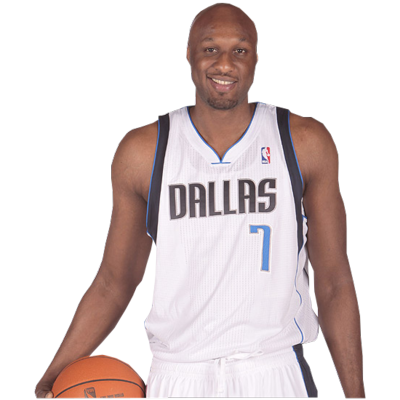
The Lakers' inexplicable dump of Lamar Odom could very well put the Mavs over the top. Then again, adding Khloe Kardashian could be killer.

Western Conference:

1. Dallas Mavericks
When the Chris Paul-to-the-Lakers trade fell through, Lamar Odom fell into Dallas’ lap, pushing them over the top of the Western Conference. More so than any other team in the West, this team has incredible depth. Dirk. Terry. Kidd. Marion. Odom. Vince. That’s not even mentioning Brendan Haywood and Rodrigue Beaubois.

2. Oklahoma City Thunder
A trendy Western Conference pick–and my pick to lose in the Finals to the Heat–the Thunder are about as talented as any team out there. My only issue with the team is how many shots Russell Westbrook likes to take. He needs to be more of a creator, getting James Harden and Serge Ibaka more involved. Basically deferring to Durant in crunch time would help, too.

3. Memphis Grizzlies
Shocker, yes, but what’s not to like about the team. They were nearly in the Conference Finals last year–without their best player. They’ve got two dominant big men, a scoring wing man, and two (nearly) competent guards. I’ll also bet you that one of Josh Selby, Xavier Henry, and O.J. Mayo really takes off this year. 30-1 odds sounds great for this team, except that the Heat are absolutely going to win.

4. Los Angeles Clippers
This team reminds me of the 07-08 Hornets. The Clippers have their own Chris Paul (Chris Paul), David West (Blake Griffin), Peja Stojakovic (Caron Butler), and Tyson Chandler (DeAndre Jordan). Additionally, they have an array of quality guards in Chauncey Billups, Mo Williams, and Randy Foye. They’re young, deep, and exciting. They’re still a player away from a real championship run, like a shooting guard, say, Eric Gordon.

5. Los Angeles Lakers
The Lakers are a potential disaster team. Kobe is grumpy, Gasol knows he was nearly on the way out, Bynum knows he could be bait for Dwight Howard, and Metta World Peace is even worse than Ron Artest. The CP3 trade isn’t what put the Clippers over the Lakers; the loss of Lamar Odom is what did them in. Now, Josh McRoberts is their fourth best player. They don’t have good chemistry, they don’t have any good point guards, and they’ve lost their depth. This isn’t looking good.

6. San Antonio Spurs
The shortened schedule is really going to kill the Spurs. They swapped George Hill for T.J. Ford and Kawhi Leonard, which isn’t going to cut it while the Heat, Mavs, and Knicks made big improvements. I don’t rank them this low because I doubt their ability to compete but because I don’t think they’ll be able to–nor want to–go all out all year. I wouldn’t want to face San Antonio in the playoffs, but there will be more than a few games during the regular season when their Big Three plays less than 60 combined minutes.

7. Denver Nuggets
I’ll give the Nuggets this: they’re deep. But they’re not too talented. Nene is a keeper, but I don’t love Danilo Gallinari, Ty Lawson, and Arron Afflalo. They could do a lot better in the regular season because of their depth (Birdman, Jordan Hamilton, Rudy Fernandez, Kenneth Faried, Andre Miller, Al Harrington…). But if and when they do make the playoffs, they’ll be lucky to win 3 games.

8. Portland Trailblazers
Raymond Felton, Gerald Wallace, Nolan Smith, Elliot Williams, did North Carolina move west? Well even without Brandon Roy and Greg Oden, this is a strong team. LaMarcus Aldridge, Wallace, Felton, and Marcus Camby makes for a strong core, especially with guards Jamal Crawford and Wes Matthews. It’s a good team, but its not good enough to compete for a title.

9. Utah Jazz
While watching Deron Williams in a Nets jersey stings, Devin Harris, Derrick Favors, Enes Kanter, and the promise of another lottery pick look even better. Sometime soon, Al Jefferson needs to be moved since he’s not a part of their future and is owed $29 million. Utah’s on the right track, but they’re not playoff good yet.

10. Houston Rockets
Houston was so close to adding Pau Gasol and Nene. But it just wasn’t meant to be. Now, they’ve got to settle with Samuel Dalembert, Luis Scola, Chase Budinger, Kevin Martin, and Kyle Lowry. They’re still young, though, with Patrick Patterson, Courtney Lee, and Marcus Morris. The only way they’re going high places is if one of their many reclamation projects (Hasheem Thabeet, Jordan Hill, Terrence Williams, and Jonny Flynn) works out.

11. Golden State Warriors
All offense, no defense, same story. I love Stephen Curry, but this is the same team as last year. Instead of drafting an athletic defender–Kawhi Leonard would’ve been perfect–they took another no defense shooter. Nice.

12. New Orleans Hornets
The Hornets actually got a great haul for Chris Paul and a solid starting five. The problem is they have no very good players and zero depth. They’re looking for a Jazz-like recovery, but I’m concerned that Eric Gordon won’t want to re-sign, and we’ll have to go through this entire song and dance again.

13. Minnesota Timberwolves
How many point guards and athletic wing players can one team hoard? I like Derrick Williams, but isn’t he the same player as Kevin Love, Michael Beasley, Wesley Johnson, and Anthony Randolph? This is the most talented Wolves team in years, but they’re still years from competition.

14. Sacramento Kings
There will never be enough shots to go around. Tyreke Evans needs his shots, Jimmer needs his shots, Marcus Thornton needs his shots, John Salmons needs his shots, Donte Greene needs his shots, J.J. Hickson needs his shots, DeMarcus Cousins needs his shots… and you get the point. They don’t have chemistry, they’re not going anywhere.

15. Phoenix Suns
It’s really sad how bad the Suns have become. Marcin Gortat is a quality big, but the rest of this team is just terrible. Who’s the third-best player? Jared Dudley? Channing Frye? Shannon Brown?? Steve Nash deserves better.
Categories: MLB | Leave a comment

D.O.S. (Death of Statistics), Pt. III

Hold up, only writer to rewrite history without a pen
No I.D. on the track, let the story begin, begin, begin

There’s long since been a debate about what the word “value” means when applied to the Most Valuable Player award. Does the winner need to be a hitter? Shouldn’t the most valuable player be on a playoff team? But there’s no standard definition of “Most Valuable”–that is left up to the voter’s discretion, as stated by the BBWAA.

To me, the most valuable player is the best player in the league. Every player provides value–or in some cases take away value (Yuniesky Betancourt)–to their team whether they are on the Yankees or the Pirates. A win is a win, and each win is valuable–just some teams are short on wins and short on value.

But before we can dive into which player from each league actually provided the most value, we need to take a look at which stats should be taken into account, and which ones are just plain out-dated. Let’s dive in.

This is the Death of Statistics, moment of silence.

Just like pitching, the first stats that come to mind when discussing hitting are often the worst. Batting Average. Runs. RBI. All three are next-to-irrelevant when it comes to comparing two players. The problem with the first is that batting average does not paint the whole picture, while the second and third don’t actually illustrate the player’s contributions.

One of the biggest differences between baseball and any other sport is that there’s no clock. Sure, pitchers are supposed to take no more than 15 seconds between pitches, but watching just one Sox-Yankees game can debunk that myth. The point is that the only way to end the game is to record 27 outs. Therefore, the only goal at bat is to not make an out. If you don’t make an out, the game doesn’t end. And if your team never makes an out, your team never stops batting, and you win.

Batting average does not measure the ability to not make an out, it gives no value to walking. Walking after all, never results in an out, so it’s one of the best things you can do at bat. On Base Percentage is, therefore, the quintessential offensive stat. In short, OBP is life.

In the first two parts of this series, I’ve stressed moving away from statistics that are subjective or can’t be explained, but now I’ll add one more bad type: individual stats that largely depend on teammates’ play. This is where stats like RBI and runs turn sour.

RBI stem from the thought that players play differently with runners on base. To be quick, this is not true. Batters generally hit better with runners on base because pitchers are coming out of the stretch, and a pitcher who gives up baserunners is more likely to give up another baserunner than a pitcher who repeatedly gets hitters out. Over the long haul, however, hitters regress to the mean in high pressure situations; they are ultimately the same hitter they are when all is said and done.

Not only do players not change during these situations, but the RBI stat is completely dependent on how many of said situations are presented to the hitter by the player’s teammates. Over a 162-game season, Yuniesky Betancourt will have more RBI than Prince Fielder if every time he comes up to bat with the bases loaded while Prince gets empty bases. Yuni’s .271 OBP may pale in comparison to Prince’s remarkable .415 mark, but he was presented with better opportunities, so he gets more RBI.

The fallacy in runs stems from the same problem. While runs are what wins games (the real goal), the individual stat for runs is completely dependent on teammates. Once the hitter reaches base, everything else is dependent on other players. If they steal bases, the opposing battery combo plays a rather large part in whether they eventually score. Plus, it’s far from fair to penalize players for hitting in front of Edgar Renteria instead of Joey Votto.

One of the best statistics, while still imperfect, has to be WAR. Quite simply, it measures the wins added compared to a replacement-level player, or Wins Above Replacement. The result is a simple number: then number of wins the respective players adds. While the formula for calculating WAR can be complicated, it’s a rather simple process.

Here’s the skinny. For offensive WAR, take the hitter’s wOBA–a weighted on base metric–divide it by the relationship between wOBA and runs and multiply it by the relationship between runs and wins. Then, you take the player’s UZR–already measured in runs saved–and multiply it by the relationship between runs and wins. Next, you take the player’s UBR–a similar measure to UZR, only dealing with runs added through baserunning–and multiply it by the relationship between runs and wins. Lastly, a positional weight is added since corner positions have a better replacement-level player than up-the-middle players.

While there are still faults with the stat (take for example the toughness of quantifying the gravity of a great defensive catcher), WAR is a fairly encompassing stat that is great for comparing players. WAR isn’t a good way to check if a trade is fair, especially if younger players are involved, but when debating between which player had a better season, it’s about as good of a metric as you’ll find.

While weeding through the garden that is the world of statistics, it’s time to turn our attention back to the MVP awards. For the AL, a pitcher was awarded MVP for the first time since 1992, including the first time it was awarded to a starting pitcher since Roger Clemens in 1986. Personally, I think pitchers are quite viable candidates, but this year the voters did not pick the most valuable player of 2011.

There were three clear candidates for AL MVP: Justin Verlander, Jacoby Ellsbury, and Jose Bautista. There’s the clear-cut Cy Young winner, up-and-coming superstar, and the masher on a non-contender. What ended up actually happening was the voters put a large stock in the play of teammates into an individual award. This isn’t an award for the best player on a good team, it really is more of an award for “Which Player Would You Want To Base Your Team Around Given This Season’s Production.” And with that being said, there’s no way you should factor in the play of teammates for this award.

But even if you did say that your team should raise or lower your standing for this award, there are several flaws in the argument for Verlander. For one, if you say the Blue Jays would be bad without Bautista, I could retort with the fact that the Red Sox and Tigers would still be good without Ellsbury and Verlander. Furthermore, Bautista literally brought the Blue Jays up from a losing team to a .500 team.

Even if you talk about meaningful games being played, Bautista gains an advantage over Verlander. The Tigers ended the season 15 games above the next-best finisher in the woeful AL Central (where no other team managed even a .500 season), while the Blue Jays were only ten games out of the wild card. Ergo Bautista brought his team closer to the playoffs that Verlander separated his team from the next-best team.

I suppose Justin Verlander, in large part, won the MVP since Miguel Cabrera posted a ridiculous .448 OBP, giving him the run support for his 24 wins.

Another argument for Verlander is the number of batters he faces in a season (969), which is much more than Ellsbury, who leads the league in plate appearances, or Bautista ever reached the plate (732 and 655). I believe these figures are misleading, though. That’s only accounting for Ellsbury and Bautista’s offensive impact, which is half of their games. The pair had 394 and 333 chances at balls, which puts their total batters faced at 1126 and 988. Oh, and Verlander only pitched in 34 games, not even 21% of Detroit’s games.

Ultimately, this award should come down to which player preformed the best. Of the trio, Ellsbury had by far the highest WAR (9.4) followed by Bautista (8.3) and Verlander (7.0). But while WAR paints a great picture, it doesn’t cover the whole story. As I’ve stated before, On Base Percentage is by far the best offensive measure, and one player is far and away the best: Jose Bautista.

Leading the league in on-base for nearly the entire season, Bautista posted an incredible .447 OBP. Production like that is irreplaceable for any team; he kept his team in the game by not producing an out nearly half the time. Not only that, but he put up incredible power numbers, leading the league in ISO by a good distance–he posted a .306 ISO followed by Curtis Granderson and Mike Stanton at .290 and .275 respectively. He was versatile in the field and smart on the basepaths.

In the end, the case can easily be made for Ellsbury for MVP, but I prefer the .447 to .376 OBP advantage. Bautista is an absolute force at the plate and a nightmare for any pitcher. Last year, many (including myself at times) thought he was a mirage, but this season validated his greatness with a .069 boost in OBP, 2.3 boost in UZR, and finally a 1.5 boost in WAR.

The oddest part to me, thought, of the AL MVP conversation was the swing of support in the last week for Jacoby Ellsbury. On the fourth to last game, Ellsbury launched a go ahead 3-run homer against the Yankees in the 14th inning against Scott Proctor–a pitcher with a 10.80 ERA at the time. That shot nearly won Boston the pennant, and consequently the MVP award. Then, the very next night, he dropped a deep fly ball by Robert Andino, which turned into an inside the park home run, consequently nearly losing him the MVP. But what did him in with the voters was the Red Sox missing out on the playoffs. Had the Red Sox beaten the Rays one more time, he’d have been the runaway favorite. And that’s not what value is.

The National League, on the other hand, didn’t have such a controversial pick. Although I disagree with Ryan Braun over Matt Kemp, there were valid reasons for both side. They put up nearly identical astounding OBPs (.399 and .397 respectively), nearly identical massive power numbers (.265 and .262 ISOs), nearly identical running numbers (3.3 and 2.9 UBRs), and nearly identical poor fielding numbers (-3.8 and -4.6 UZRs).

Similarly to Ellsbury and Bautista, what ultimately did Kemp in was his lack of good teammates. Milwaukee won the Central by 6 games, and the Dodgers finished 6.5 games out of the Wild Card. But what’s even stranger than that, is how close to winning the MVP he was but for 8 hits.

If Matt Kemp had 8 more hits over the whole season–that’s 3 every two months–he would’ve taken home the Triple Crown for the first time in 44 years, including 74 years since Joe Medwick last brought it home for the NL. Belonging to such prestigious company would have undoubtedly launched Kemp to the top of nearly every ballot. But do those 8 hits really mean so much to his season? I’m sure you could pick out 8 error calls, trap plays, and bang-bang plays that should have gone his way with less than an hour of watching film. Eight hits should not an MVP make.

The stats were close, but Kemp played a tougher position, ran better, and put up more home run power. But Ryan Braun knows why he won, and he divulged the main reason in an interview with MLB Network: “There are multiple candidates who I believe were deserving. I think ultimately, the reason I won is because they put a better team around me. Without a doubt, that’s a huge reason that I was lucky enough to win this award.”

So the question comes to you: what is value? Being placed in the right situation, or just producing the most over a long season. You can’t take what teammates do into account for individual stats and individual awards, which has become an unhealthy problem for voters and fans over the past decade. So please, when you look at the back of your next baseball card, give each stat a second thought.

This is the Death of Statistics, moment of silence.

La da da da

Hey Hey

Goodbye

Categories: MLB | Leave a comment

D.O.S. (Death of Statistics), Pt. II

Hold up, only writer to rewrite history without a pen
No I.D. on the track, let the story begin, begin, begin

Of all the aspects of baseball, none is more divisive than pitching. There are dozens upon dozens of metrics that range from projected ERA to drop on a curveball. But the issue is not which statistic is most prevalent, the problem is a systematic fissure between old school and new school ways of thinking.

As I began to explain in the first part of this four-part series, there are a lot of people stuck in the back-of-the-baseball-card state of mind. What that means is that we can look at a handful of simple, long-standing stats (batting average, homers, RBIs, runs) and tell how good that player was. But this just doesn’t work. Not only do those stats not tell the whole story, they don’t even tell the story well. Let me explain.

This is the Death of Statistics, moment of silence.

When it comes to pitching statistics, one usually comes to mind first. Sadly, this is the worst pitching stat out there. I’m, of course, talking about the win.

Let me be clear, there is nothing more important in sports than winning the ball game. But the pitcher’s win-loss statistic has no statistical relevance. Ultimately, the stat comes down to how well your teammates play.

I have no issue with Felix Hernandez winning the Cy Young in '10. Maybe Seattle's beyond-anemic offense had something to do with his 13-12 record.

Take, for example, Justin Verlander and Cliff Lee this season. Both had ERAs of 2.40, but Cliff Lee received 4 runs of support per game compared to Verlander’s 4.56 runs of support. All of a sudden, Lee owns a measly 17-8 record compared to Verlander’s “other-wordly” 24-5 record. Did Lee give up any more runs than Verlander? No. His teammates just didn’t play as well.

Wins don’t add anything to the analysis of a pitcher. If you need look at control, look at WHIP or K/BB. If you’re interested in the ability to miss bats, look at Contact Percentage or Line Drive Percentage. But when comparing players, you cannot take the skills of teammates into account, which is the central point of the Pitcher Win-Loss stat.

In the first part of this series, I wrote about the worst stats: the ones that are subjective and the ones you can’t explain. Well, to some extent, the second most recognizable pitching stat, ERA, is subjective. The goal of the statistic is simple: show how many runs the pitcher gives over nine innings. The problem, however, is that errors play a huge role in earned runs, which is the center of the average.

I don’t want to totally dismiss ERA, I think it is still a very useful and mostly representative stat. But since it relies heavily on the error and the play of teammates, it should be taken with a grain of salt. So the best pitching statistic, I’ll say it again, are those that remove the play of teammates.

When pitching, there are only three outcomes that are completely dependent on the pitcher: a strikeout, walk, and home run. The rest are dependent on the skills of the fielders, which cannot be attributed to the pitcher himself. Whether a long fly ball, dribbling ground ball, or liner in the gap, the play is out of the hands of the pitcher once the ball is hit in play. And because of that, a myriad of statistics have been formed to project ERA.

There is FIP, xFIP, SIERA, PECOTA, DIPS, all sorts of advanced defensive metrics. At the core of all of them is taking the skills the pitcher has and turn it into an ERA predictor. My personal favorite is FIP, which is the simplest, and in my opinion, the most effective. By taking the three pitcher controlled stats, these sabermetric stats better illustrate the skill of the pitcher. After all, how can you penalize Mike Pelfrey for playing in front of nine defensive butchers while Big Game James Shields gets to play in front of a cavalcade of elite defenders?

When it comes to the Cy Young Award, I didn’t have much of a problem. Justin Verlander was by far the most dominant pitcher in the AL, although the national attention paid to his 24-5 record blew his dominance slightly out of proportion. Still, CC Sabathia and Jered Weaver put up good fights, but it’s hard to come up with a solid argument over Verlander. He posted an AL-best 2.40 ERA, 4th best 2.99 FIP, and second best 7.1 WAR. Not only that, but he stranded a ridiculous 80.3% of runners, which were few and far between thanks to a 0.92 WHIP and .191 batting average against.

It’s on the NL side, however, that I had a slight problem. Clayton Kershaw, one of the fastest rising pitching stars, won the “pitching triple crown” with the most wins, strikeouts, and lowest ERA. We’ve already be over the (un)validity of the win and the problem with ERA, which rather tempers the excitement over the rare feat. Kershaw may have bested Halladay’s ERA 2.28 to 2.35, but Halladay takes the cake for FIP (2.20 to 2.47) and WAR (8.2 to 6.8).

I’m not terribly upset by the results of the NL Cy Young, but I do hope that voters think again before casting votes, infatuated with out-dated stats like wins and saves (I’ll save this argument for a later date). It’s time to move past the subjective stats and those dependent on teammates. Because the only way you can truly compare players statistically is looking at hard data of those players alone.

This is the Death of Statistics, moment of silence.

La da da da

Hey Hey

Goodbye


Categories: MLB | Leave a comment

D.O.S. (Death of Statistics), Pt. I

Hold up, only writer to rewrite history without a pen
No I.D. on the track, let the story begin, begin, begin

There’s a movement among all sports to find a quantitative way to measure the ins and outs of sports. From DVOA to PER to UZR, there is just a profusion of statistics made to more accurately figure out which players actually are better. But no sport has more of these progressive statistics that baseball, oftentimes called an individual sport disguised as a team sport.

Personally, I’m a big proponent of nearly every aspect of the fast-charging sabermetric movement, and I think it’s about time that these ground-breaking innovations become more mainstream. The back-of-the-baseball-card thinking of batting average, runs, homers, and RBI meaning everything is prehistoric, yet not everyone is willing to let go. But here’s where things change. I’m going to run a four-part series where I debunk out-dated statistics along with their corresponding awards, and finish with introducing a new statistic I’ve recently created.

This is the Death of Statistics, moment of silence.

Defense has always been the toughest aspect of baseball to quantify. Whereas on offense, it’s easy to show runs being scored, driven in, and created offensively, we can’t explicitly see how many runs are being saved defensively. Ultimately, the goal of defense is to make an out, but we’ve still yet to find a numerical way to illustrate split-second instincts or if a player takes the shortest route to the ball. We can barely quantify the strength an accuracy of a throwing arm beyond the scouts 20-80 scale.

I have two main rules of thumb for statistics: if it’s subjective or you can’t explain how you get to the number, it’s not a good statistic. There’s nothing you can learn from analyzing “data” that is all based from opinion. If you’re looking for an opinion on how well Torii Hunter can still cover ground on center field versus right field, I’d suggest talking to a scout.

This brings us to the oldest defensive “metric” in the game: the error. After all, the last thing you want to do is mess up defensively, right? And a team’s attentiveness to details can be easily tracked by their fielding percentage, right? Well, not so much. Simply put, you can listen to any baseball broadcast and hear two to three instances in every game when the announcers squabble over whether a hot shot down the line was an error or a hit. And then if that hitter scores, the scorer’s decision is the difference between an earned and unearned run for the pitcher, one of the reasons people should take ERA with a grain of salt.

I suppose this World Series deciding whiff isn't an error since Nelson Cruz never actually touched the easy pop fly.

But the borderline call on the shot down the line isn’t even the most egregious flaw of the statistic. The worst part of the statistic is the application to fly balls. Take this common situation into consideration: Lance Berkman is manning right field, and an easy fly ball is hit to his right. The only problem is Berkman originally breaks to the left, has to switch directions and relocate the ball. He gets back on track, but realizes he probably won’t get to the ball in time. Lance has two options: a) let the ball bounce and hold the runner to single or b) dive and try to take away the base runner.

If Berkman lets the ball bounce, he doesn’t get an error, despite his poor fielding and lack of  judgement. If he dives and barely gets leather on the ball, he gets an error because he touched the ball and should have made the play. He made the same mistake on the play, but the error doesn’t cover the real problem. How can the difference between a good and bad defensive play be just touching the ball? It doesn’t make sense.

Fine, you say, then we can look at outfield assists to see who’s got a strong arm and doesn’t by looking at how many runners they threw out. Well the assist really isn’t a good measuring stick for how good an arm a player has. Alex Gordon led the league in assists partially because he has a good arm, but players aren’t afraid to take an extra base on him, either. Had the ball been hit to Ichiro, they would have thought two or three more times before taking off for an extra base. Need more proof? Manny Ramirez led the league in assists back in ’05 and the great Pat Burrell was tops in the NL in 2001.

With those prehistoric statistics out of the way, it’s time to focus on what is, in many experts opinions, the best metric for defense: UZR. Ultimate Zone Rating is a very complicated stat, but once you familiarize yourself with it, UZR becomes quite the tool. Basically, the baseball field is split up into 64 zones. For infielders, only ground balls–bunts included–are taken into account (this means no pop ups or line drives). As for outfielders, only fair fly balls and line drives are included. For each zone, the league-wide out-rate for that specific zone at the player’s position is subtracted from the player’s out-rate for a net rate.

Still with me? Next each net out-rate is multiplied by the number of balls hit in that zone, which gives us the total balls saved or lost compared to league average. This value is then multiplied by the run-value for a ball hit in the zone, which finally gives us the runs saved at this zone. Total up all of the zones for the player, and you have UZR, total runs saved.

But not everyone is on board with UZR or newer fielding metrics in general, which is evidenced by the Gold Glove Award winners. Really, these awards are of little consequence, but the way winners have gotten them in the past really bother me.

As you look through past winners, you’ll notice two things: lots of repeat winners and lots of winners on career years. While the best defenders are generally good throughout their career, the method to the madness of voting for Gold Gloves is not great. Analyst Keith Law puts it best when he said, “The two best ways to win a Gold Glove are to hit like crazy or to have won a Gold Glove before. And then once you’re in, you’re like an African dictator for life. It’s yours until you retire or until you’re just so awful that they can’t overlook it anymore.”

It sounds wrong, but it’s all-too-often true: MVP candidates are often handed Gold Gloves because of the attention they receive. Conversely, weak offensive players rarely get consideration because they’re considered less valuable players. It’s wrong, but it happens. Take for example, the NL Gold Glove winners. Matt Kemp pulled home his second trophy in three years, despite a 2011 UZR of -4.6 and a career total of -42.3. But since he was one homer short of become the fifth member of the 40-40 club and nearly posting a .400 OBP, voters look at his athletic frame and highlight catches and hand him the award.

Andre Ethier had to be another questionable winner, despite his error-less season. He, along with Kemp and Clayton Kershaw were the lone bright spots for a terrible Dodger season, and their nice story line commandeering awards from much more deserving teammates Chris Young and Justin Upton of the D-Backs, who combined to save nearly 22 more runs than the Dodger duo. And while on the subject of Dodgers did Clayton Kershaw really have an exceptional fielding year, or did his 22 wins and 2.38 ERA help out a bit?

Former Dodger ace Orel Hershiser can help answer this quandry. In his eighteen year career, he won a Gold Glove once. Coincidentally, it was the same year he won his only Cy Young, went 23-8 and had a 2.26 ERA over 267 innings. On a Sunday Night Baseball broadcast a year ago, he admitted that he didn’t really feel like a better fielding pitcher that year. But he sure did feel like a better pitcher.

The system for picking winners, plainly, is flawed. Even though Brett Gardner was far and away the best fielder in the league with a 25.8 UZR–a slight improvement from last year’s 24.9–he didn’t put up MVP numbers offensively like Jacoby Ellsbury, and runners didn’t try to run on him like they did on Alex Gordon, so he didn’t come home with any hardware. Other players like Ben Revere, Peter Bourjos, and Franklin Gutierrez, who cover the two thirds of the world Fred Smoot doesn’t cover, managed a combined OBP of .305, costing them a shot at awards.

Times are changing, and it’s time to embrace a newer approach to defense. And for the love of Tebow, don’t let offense make or break the candidacy of a potential Gold Glove winner.

This is the Death of Statistics, moment of silence.

La da da da

Hey Hey

Goodbye

Categories: MLB | Leave a comment

Favored Underdogs

You might be looking at the title of my blog and start scratching your head. I don’t blame you. Some crazy stuff goes on in the NFL, but underdogs being favored doesn’t make sense from any level. But this season, teams who are favored just aren’t coming through.

Take a look at the lines from the first eight weeks of the season. The underdog teams are winning 54.3% of the time, good for a 63-53 record. This isn’t out of the ordinary really, and Vegas is still making plenty of money. But it raises the point of what the lines are really meant to do. Contrary to popular belief, lines aren’t really made to show who should win, as much as they are made to get an even amount of plays on each side so casinos can make as much money as possible.

Take, for example, Super Bowl and World Series odds for popular teams. Dallas started the year as 10-1 favorites to win the Super Bowl. They weren’t actually that highly thought of, but people will still bet on them. The Cubs are often as high as 8-1 as World Series favorites because no matter how high the odds get, Chicago fans who head over for a fun weekend in Vegas will still place 10 bucks on their Cubbies. So Vegas makes money, and we all lose.

This isn’t all to sound cynical, but rather to point out that lines may not always be what they seem. If you’re quick to jump on the bandwagon of an unpopular team, stand your ground. The Bills will never get the respect of most betters because they just think of J.P. Losman and and the old Bills. So stay strong in your convictions and bet away!

Here are my Week 9 odds with home teams in CAPS.

Falcons (-7.5) over COLTS
What makes this game really sad is that this would be a great game one year ago. But this one won’t be close; these are the type of games that make me want to name Peyton Manning the MVP.

BILLS (-1.5) over Jets
New York plus points sounds really enticing. In fact, I nearly took them this week. But the Bills are 5-0 at home, and the Jets are 0-4 on the road. You may be like me and not like either team this year, but you can’t deny the success of Former Harvard Quarterback Ryan Fitzpatrick and the rest of the offense.

TEXANS (-10.5) over Browns
The Browns are another enticing underdog team with such a huge line this year. They’ve got two great cover corners in Joe Haden and Sheldon Brown, and Texans’ star receiver Andre Johnson is missing a fifth straight game with a hamstring injury. But Cleveland can’t stop the run. And boy can Houston pound the ball. Arian Foster and Ben Tate are leading the charge, putting up 141.9 yards per game, good for 4th in the league. Match that up with the third best defense in the league, and I’m comfortable giving up so many points.

COWBOYS (-12.5) over Seahawks
Can you really trust Tony Romo this much? In short: when they face the Seahawks, yes.

CHEIFS (-6.5) over Dolphins
Chris Berman today said that all the Dolphins want is a win. No, I think all they want is Andrew Luck. They’ve kept games close the past two weeks, only to blow double-digit leads. But the Chiefs are better than the Broncos, and Arrowhead Stadium can be tough on opponents. This season will be painful, Dolphins fans, but you’ll be happy with Andrew Luck under center next year.

Buccaneers (+7.5) over SAINTS
Just think for a second about how great the quarterbacks in the NFC South are.
…Done? Alright well here are my rankings:
1. Drew Brees
2. Cam Newton
3. Josh Freeman
4. Matt Ryan
5. Jimmy Clausen!
Alright, well maybe that fifth one doesn’t belong, but the interesting rank is Freeman at 3 over Ryan. Some of this has to do with Ryan showing promise, but never totally coming through, but Freeman has really blossomed into a star. He’s been hidden by Cam Newton’s success, but they share the same frame, and Freeman’s been really clutch. This season’s he’s been more turnover prone than last year’s breakout, but he’s playing great now and on his way up.

Niners (-3.5) over REDSKINS
I’m no fan of Alex Smith, but what have the Redskins done to merit being a 3.5 point underdog? The Niners have a killer defensive line, plenty of options offensively, and no John Beck. Here that crunch? That’s the Lance in my Pants Lock o’ the Week.

Bengals (+2.5) over TITANS
Who would’ve guessed that after a lockout, veteran free agent pickup Matt Hasselbeck would be firing on all cylinders while the most explosive running back in the game would look more like Bob Johnson than Chris Johnson? Not me. But I like the Bengals this week with Cedric Benson coming off a short suspension, and Andy Dalton being just good enough to not blow a win.

Broncos (+7.5) over RAIDERS
News is coming out of Cincinnati that the next best offer for Carson Palmer after Oakland’s of two first-round picks was a third. A third! I don’t care if you bring in Rudi, Chad, and the rest of the crew with T.J. Houshmandzadeh, this team won’t be good.

They called it, "San Diago," which, of course does not mean Saint Diego. In fact, scholars maintain that the true translation has been lost.

CHARGERS (+5.5) over Packers
I have a hunch, and this is just a hunch, but I think the Packers will hit a speed bump this week. Teams coming off byes this year have been playing poorly because of the crazy padded practice and player contact rules. Not only that, but the Packers have not been able to stop the pass or run the ball. Phillip Rivers can light it up through the air, and I’m not sure the Pack is read for what’s coming for them in sunny San Diago.

Rams (+4.5) over CARDINALS
I’m still confused as to how a winless Rams team beat the Saints last week. The Saints put up 62 points the week before and St. Louis had put up 56 points the whole season. It just doesn’t make any sense. I’m picking the Rams not in good faith, but rather mistrust in the Cardinals. I’ll be willing to give points with the Cardinals when Kevin Kolb proves to be average.

PATRIOTS (-8.5) over Giants
Well Eli Manning says he’s in Tom Brady’s league, so this game should be really close, right? Right. Hakeem Nicks and Ahmad Bradshaw are out, and Brady is in. That about sums things up for me.

Ravens (+3.5) over STEELERS
I love the Ravens this year. The put a beating on the Steelers in Week 1, but we all know that won’t happen again. However, we’ve seen Ray Rice figure out the Steel Curtain, having two of the three hundred yard rushing games against the Steelers in the last 65 games. Even if Baltimore doesn’t win, I think it’s only by a field goal.

EAGLES (-6.5) over Bears
The Eagles showed last week just why I like them to make it to the Super Bowl–they’re fast, quick, and explosive. LeSean McCoy may be the second best back in the league, and we haven’t even seen DeSean Jackson in full form yet. This game won’t be close for one reason: the Bears are old and slow on defense. Play all yer Iggles in fantasy!

Last Week: 4-9

Season: 55-61

Lance in my Pants Lock o’ the Week: 5-3

Categories: MLB | Leave a comment

The College Essay

Some time during preschool, nearly every boy knows what he wants to be when he grows up. A fireman. A garbage man. A T-Rex. Some kids even want to play shortstop for the Red Sox. And that kid was me. Growing up in a baseball-crazy family, I was eager to begin tee-ball before I could even read the Charlotte Observer’s breakdown of my Red Sox’ extra inning win over the Orioles. Nothing excited me more than sprinting out of my mom’s Honda Odyssey down to the ball field and playing with my best friend Daniel. But then Daniel started to make All-Star teams year after year, while my bland bat relegated me to reading the Observer.

By middle school, I knew playing baseball wasn’t my future. As much as I loved America’s pastime, I wouldn’t be the next Hank Greenberg, let alone the next Mike Lieberthal. Yet despite my lack of power at the plate, I remained passionate about the sport, whether reading the Observer’s sports section or devouring that week’s Sports Illustrated. Then, one day during seventh grade lunch, I decided to take my dedication to sports to a new level by starting to write a preview for the upcoming baseball season. It wasn’t much, just fourteen pages of my own analysis that ended in triumph as I correctly predicted my hometown Red Sox to win it all. That was my first taste of sports writing—and I absolutely loved it.

Without a doubt, Bill Simmons has had one of the largest impacts on my writing aspirations.

When the 2008 season rolled around, I set off to write a bigger, better preview, and it grew to twenty-one pages. My Red Sox didn’t win back-to-back titles as I had clumsily predicted, but I was nonetheless undeterred. My parents knew of my love for baseball and my budding interest in writing, so they bought me Bill Simmons’ book Now I Can Die in Peace. It instantly became my favorite book. And then it hit me. I knew what I wanted to be when I grew up: a sports journalist.

With my heart set on a future in the media, I worked even harder to perfect my craft. My preview for the 2009 season grew to thirty-nine pages of in-depth analysis and predictions. I started to blog almost every day during the baseball season, sharing my thoughts with anyone who stopped by to read. Yet despite my hard work in preceding previews, I knew I could do more; I needed to set myself ahead of the pack.

Between Algebra II studies and AP World readings, I worked around the clock until my budding fourteen-page project blossomed into a sixty-nine-page baseball dissertation. I searched for innovative applications of statistics in order to break the mold of accepted sports analysis. For the first time in my life, the start of the baseball season became bittersweet because it meant that I finished writing 3500 words on the woeful prospects of the Kansas City Royals and Pittsburgh Pirates escaping the basement of their divisions.

The more writing I do, the more I realize why I want to be a sports journalist. I don’t do it for the recognition—even though I was featured last spring in the Observer. It’s not about the money, not about the glory. I do it because I eat, breath, and sleep sports. More than anything else, I do it because this is my passion. I may not throw a stellar knuckleball like Daniel, but I’ll give the most unique spin on any sports story.


*Editor’s note: Daniel’s real name is Ben, but I changed the name to avoid confusion.*

Categories: MLB | 2 Comments

Create a free website or blog at WordPress.com.