MLB

I Am an A-Rod Fan

Congrats, Major League Baseball, you’ve turned NCAA on us.

Major League Baseball eschewed the 21st century by embracing human error over getting calls correct, but they’ve outdone themselves with the Biogenesis case.

MLB set off on a poorly cloaked witch hunt for two of the biggest name (rumored) steroid users: Ryan Braun, who avoided an earlier PED suspension on a technicality, and Alex Rodriguez, who is just universally hated. The league paid known sleazebag Anthony Bosch for information from his sketchy health clinic, although they previously identified him as having highly questionable information.

Finally, they settled on a 65-game suspension for Braun and nailed 12 more players with 50-game suspensions. Then they dropped a 211-game bomb on Alex Rodriguez.
a

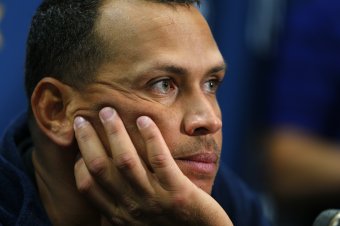
MLB has botched the A-Rod case so badly, that I’m actually rooting for him. And I hated A-Rod.

They’ve mishandled this whole case so badly that they’ve made me a fan of the most hated player in sports.

Major League Baseball and the MLBPA agreed on a Joint Drug Agreement, which states that any player who fails a test or has possession of a PED is to be suspended 50 games after his first offense, 100 games after his second offense, and given a lifetime suspension on the third offense.

MLB circumvented the JDA already when they slapped Braun with a 65-game suspension, but they mutually agreed to that ban. A-Rod’s 211-game suspension completely oversteps baseball’s jurisdiction according to the JDA and CBA.

Alex Rodriguez clearly didn’t do a good thing. He was the Chosen One. It was said that he would destroy steroids, not take them. Bring balance to the sport, not leave it in darkness.

But now Major League Baseball has found a way to make a cheater into a sympathetic villain, just like Darth Vader at the end of Return of the Jedi.

So what makes whatever A-Rod did more than 4 times worse than what the other Biogenesis players did? If he did use HGH in recent years, what makes him so special that he’s given a suspension 146 games longer than any other previous one?

The short answer: there’s no reason.

MLB says that part of the reason for the excessive length is because he tampered with baseball’s investigation. Well Melky Cabrera did the same thing–and created a fake website in an attempted coverup–and only got 50 games. MLB clearly has a vested interest in getting Rodriguez away from the game.

The Yankees get out from under around $33.5 million in salary plus millions more in luxury tax–more money they can spend. MLB gets Rodriguez–who’s been nothing but bad press for the sport recently–away from baseball and momentarily away from the record books.

While it’s clear that Major League Baseball is overstepping its bounds–which leads to the MLBPA’s appeal that will last until November or December–this isn’t the real issue.

Alex Rodriguez breaking rules–and he hasn’t even failed a drug test–is a micro issue. MLB’s rules on PEDs is the macro issue.

What we need to be doing now is looking at why steroids are banned. A-Rod technically cheated because the rules said he wasn’t allowed to use a substance. Cheating by definition is breaking rules. So why are steroids illegal?

It’s easy to see why substances that are harmful to players’ health should be illegal. You’re asking players to sacrifice their own health to keep up with the Joneses. Furthermore, it creates a culture in which young, impressionable kids feel they have to renounce their future health to compete and earn a scholarship.

But what about non-harmful supplements? Protein shakes seem to be widely accepted because they have no known downside but help build muscle. Aspirin stops pain and similarly has no major side effects. No one thinks they should be illegal.

As Yahoo!’s Jeff Passan put it: “If one player is taking synthetic testosterone to heal faster and another player is getting his blood spun and reinjected into him to heal faster, why is the former banned and the latter welcomed? Because the government says so? The government also says marijuana is illegal, and baseball players on the 40-man roster can take bong rips galore without penalty.”

The core issue isn’t that steroids are bad because they’re banned. That’s begging the question. The real issue is that harmful performance enhancers create a bad culture, while non-harmful performance enhancers just, well, enhance your performance like drinking that protein shake or taking a dietary supplement do.

We know that athletes will do whatever they can to gain a competitive edge. Catchers frame pitches to get extra strikes. Ray Lewis sprayed deer antler velvet under his tongue. Bartolo Colon had bone marrow stem cells injected into his elbow. Hell, Hank Aaron and Willie Mays openly used amphetamines, and Gaylord Perry used a banned spitball, and they’re accepted with open arms into the Hall of Fame. Yet steroids are the spawn of the devil.

Nothing gets people up on their moral high horse like steroids, but it would be hard to turn down a pill that makes you 50% markedly at your job, especially if it means escaping poverty in a third-world country.  Really, using modern medicine isn’t much different than any other type of cheating in the past, even if known cheater Perry would have you think otherwise.

You know what the real crime is, right? Babe Ruth never got to face Latino and black pitchers. Ask Daniel Tosh.

Baseball needs to re-evaluate what is banned and what isn’t based on potential health risks. Because if something like deer antler spray has no health risk, what’s the difference between it and a protein shake? It’s just a rose by another name.
Categories: MLB | Leave a comment

Crawdads on pace to shatter records

(First appeared in The Charlotte Observer)

Baseball history is being made by the Hickory Crawdads this summer.

The Crawdads have passed their season record of 135 home runs–and there’s still a quarter of the season left. And they’re well on their way to shattering a Class A record set in 1998.

But with the home runs come a lot of swings and misses. The team also is on pace to break the minor league record for strikeouts and become the first team to whiff 1,400 times.

The Crawdads have struck out 10 times or more in more than half of their games, and they’ve hit multiple home runs in more than a third of their games. This has led them to be the fourth-highest scoring team in the South Atlantic League and the second-worst team in batting average and on-base percentage.

Crawdads second baseman Ryan Rua leads all of minor league baseball with 29 home runs. At age 23, he is older than most players in the league, and there isn’t much precedent for sluggers his age making it from Class A to the majors.

But he is playing on a team filled with potential and loaded with some of the best young talent in baseball.

On a rainy afternoon last month in Hickory, seven scouts watched the Crawdads, the youngest South Atlantic League team.

The club includes five of the Texas Rangers’ top 10 prospects, according to Baseball Prospectus, an amateur baseball scouting service. The Rangers, Hickory’s major league parent club invested $13.7 million in those five players.

That collection of talent on one Class A team is rare. The Arkansas Travelers, the Angels’ Class AA affiliate, is the only other minor league team with even four hitters among the team’s top 10 prospects.

With a starting lineup whose average age is nearly three years younger than the rest of the South Atlantic League, Hickory’s talent has keyed the Crawdads’ run to first place in the Northern Division.

“For me being the older guy,” Rua said, “it’s fun to watch them and their talents they have at such a young age.”

While manager Corey Ragsdale said the players aren’t close to where they need to be as hitters, he also said there isn’t another minor league team he’d trade his for because of its sheer talent.

“This is their first full year of baseball,” Ragsdale said. “A bunch of them would be freshman in college right now. Some of the Latin kids would even be seniors in high school still. It’s a pretty big jump; they’re facing kids older than them every day of the season.”

Third baseman Joey Gallo, 19, and center fielder Lewis Brinson, 19, have accounted for nearly a third of the team’s home runs and more than a quarter of the team’s strikeouts. The two were drafted 10 picks apart last year and have roomed together for two years.

Gallo led the minors in home runs before suffering a groin injury that has kept him out for a short stint. He has what one scout called “majestic power.” Brinson is an excellent defender with power and speed. He has 17 home runs and 16 stolen bases.

Even though they signed for a combined $3.875 million, the two live small. Gallo grew up in Las Vegas, where he often would head to the Strip for dinner and a show on the weekend. Now, he and Brinson spend a lot of time playing video games.

“Maybe we can go out to eat a little more, but that’s about it,” Gallo said.

The other three young potential stars arrived through a different route. Catcher Jorge Alfaro, 20, right fielder Nomar Mazara, 18, and first baseman Ronald Guzman, 18, signed with Texas in international free agency. Mazara got the biggest bonus of the group: $5 million.

The three live together in an apartment with shortstop Luis Marte. Mazara, Guzman and Marte, along with 11 other Crawdads played last year for Ragsdale in Arizona, where they won the Arizona League rookie title. Since they’ve been together for more than a year, they have chemistry and can overcome a language barrier.

“We always mess around, saying stuff in Spanish–mostly bad words because that’s all we know–and they say a lot of bad words in English to us,” Gallo said. “We all get along really well, and it’s a lot of fun being with people that are from different places in the world and grew up a little different than you did.”

After finishing a half-game out of first place in the first half, the Crawdads now are third in the Northern Division. For the season, they are 2 1/2 games out of first.

The fans have taken notice of the team’s talent and success; attendance which had been falling during recent years, is up slightly to 2,075 fans per game.

The players also see how special this team is and sometimes envision themselves playing together with the Rangers in the future.

“We have a tremendous amount of talent on this team,” Gallo said. “I don’t see why this whole team can’t move up together and make it up to the top.”

Categories: MLB | Leave a comment

Hickory Crawdads Podcast

I’ve gotten to write a lot of stories for the Charlotte Observer this summer, but this one has been my favorite this far. I went an hour north of Charlotte to Hickory to watch the Hickory Crawdads play.

Besides the fact that they’ve got a great team name, the team is incredibly interesting. They’ve got five of the Rangers Top 10 prospects–they received a combined $13.7 million bonus–and that doesn’t even include the minor league leader in home runs.

Joey Gallo. Lewis Brinson. Nomar Mazara. Jorge Alfaro. Ronald Guzman. Even Ryan Rua and Nick Williams. The list of talented players goes on and on.

You can read the full article here, but there’s more content I want to share that I couldn’t fit in the article. That’s why I made the 5th installment of The Knuckle Cast.

This podcast features interviews with Gallo, Brinson, Rua, Williams, and manager Corey Ragsdale. My interviews with Mazara, Alfaro, and Guzman were over the phone and needed a translator, so they’re not really worth sharing.

I had a lot of fun with this project, and I hope between the article and the podcast you enjoy it a fraction as much as I did.

The Knuckle Cast Episode #5

(This may take a minute to load, but I promise it’s worth the wait.)

_

(The Observer link is now broken, so I copied it here.)

Baseball history is being made by the Hickory Crawdads this summer.

The Crawdads have passed their season record of 135 home runs–and there’s still a quarter of the season left. And they’re well on their way to shattering a Class A record set in 1998.

But with the home runs come a lot of swings and misses. The team also is on pace to break the minor league record for strikeouts and become the first team to whiff 1,400 times.

The Crawdads have struck out 10 times or more in more than half of their games, and they’re hit multiple home runs in more than a third of their games. This has led them to be the fourth-highest scoring team in teh South Atlantic League and the second-worst team in batting average and on-base percentage.

Cradads second baseman Ryan Rua leads all of minor league baseball with 29 home runs. At age 23, he is older than most players in the league, and there isn’t much precedent for sluggers his age making it from Class A to the majors.

But he is playing on a team filled with potential and loaded with some of the best young talent in baseball.

On a rainy afternoon last month in Hickory, seven scouts watched the Crawdads, the youngest South Atlantic League team.

The club includes five of the Texas Rangers’ top 10 prospects, according to Baseball Prospectus, an amateur baseball scouting service. The Rangers, Hickory’s major league parent club invested $13.7 million in those five players.

That collection of talent on one Class A team is rare. The Arkansas Travelers, the Angels’ Class AA affiliate, is the only other minor league team with even four hitters among the team’s top 10 prospects.

With a With a starting lineup whose average age is nearly three years younger than the rest of the South Atlantic League, Hickory’s talent has keyed the Crawdads’ run to first place in the Northern Division.

“For me being the older guy,” Rua said, “it’s fun to watch them and their talents they have at such a young age.”

While manager Corey Ragsdale said the players aren’t close to where they need to be as hitters, he also said there isn’t another minor league team he’d trade his for because of its sheer talent.

“This is their first full year of baseball,” Ragsdale said. “A bunch of them would be freshman in college right now. Some of the Latin kids would even be seniors in high school still. It’s a pretty big jump; they’re facing kids older than them every day of the season.”

Third baseman Joey Gallo, 19, and center fielder Lewis Brinson, have accounted for nearly a third of the team’s home runs and more than a quarter of the team’s strikeouts. The two were drafted 10 picks apart last year and have roomed together for two years.

Gallo led the minors in home runs before suffering a groin injury that has kept him out for a short stint. He has what one scout called “majestic power.” Brinson is an excellent defender with power and speed. He has 17 home runs and 16 stolen bases.

Even though they stigned for a combined $3.875 million, the two live small. Gallo grew up in Las Vegas, where he often would head to the Strip for dinner and a show on the weekend. Now, he and Brinson spend a lot of time playing video games.

“Maybe we can go out to eat a little more, but that’s about it,” Gallo said.

The other three young potential stars arrived through a different route. Catcher Jorge Alfaro, 20, right fielder Nomar Mazara, 18, and first baseman Ronald Guzman, 18, signed with Texas in international free agency. Mazara got the biggest bonus of the group: $5 million.

The three live together in an apartment with shortstop Luis Marte. Mazara, Guzman and Marte, along with 11 other crawdads played last year for Ragsdale in Arizona, where they won the Arizona League rookie title. Since they’ve been together for more than a year, they have chemistry and can overcome a language barrier.

“We always mess around, saying stuff in Spanish–mostly bad words because that’s all we know–and they say a lot of bad words in English to us,” Gallo said. “We all get along really well, and it’s a lot of fun being with people that are from different places in the world and grew up a little different than you did.”

After finishing a half-game out of first place in the first half, the Crawdads now are third in the Northern Division. For the season, they are 2 1/2 games out of first.

The fans have taken notice of the team’s talent and success; attendance which had been falling during recent years, is up slightly to 2,075 fans per game.

The players also see how special this team is and sometimes envision themselves playing together with the Rangers in the future.

“We have a tremendous amount of talent on this team,” Gallo said. “I don’t see why this whole team can’t move up together and make it up to the top.”

Categories: MLB, Uncategorized | Leave a comment

Breaking Down The Jake Peavy Trade

Hey, guys, it’s been a while. Haven’t wrote much (or anything) about the current baseball season, so I thought I’d start with a breakdown of the biggest trade from trade deadline: Jake Peavy to the Red Sox.

To preface the rest of this article, I’d like to say that Jake Peavy was one of my favorite pitchers growing up. In fact, I’m wearing his Padres t-shirt right now as I write this–it’s about two sizes too small. Wow was he dominant from ’04 to ’08. My (irrational) love for Peavy may be well docummented, but I can assure you that the rest of the article will be written with the utmost objectivity.

But back to the real news.

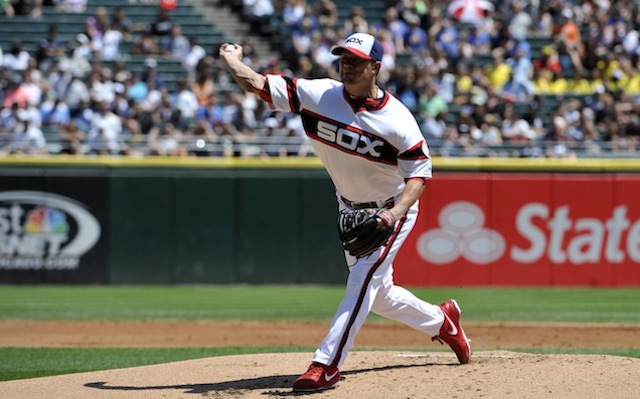
Underrated topic: theese White Sox jerseys need to stay. They're fantastic.

Underrated topic: these White Sox jerseys need to stay. They’re fantastic.

The Red Sox picked up Peavy and the $20 million owed to him for Jose Iglesias and A-Ball prospects Cleuluis Rondon, Frank Montas, and J.B. Wendelken. Iglesias ended up in Detroit in exchange for Avisail Garcia, and the Sawx also picked up Brayan Villarreal.

When news broke last night that the Red Sox acquired Peavy for Iglesias and others, I was on the edge of my seat waiting for the other shoe to drop.

It can’t just be Iglesias, right? But they wouldn’t trade him AND Jackie Bradley Jr., Anthony Ranaudo, or Will Middlebrooks for Peavy, right? What am I missing?

Iglesias and spare parts is a steal for Peavy, even if the 32-year old will never see his glory days of a 97 mph heat and a power slider.

We’ve already seen Iglesias’ peak: elite defense and a .409/.455/.530 through June fueled by an inconceivable, unsustainable .464 BABIP and 15.4% infield hit rate. To put that in perspective, Chris Johnson and Ichiro are tops in the league for the season with a .425 BABIP and 15.2% IFH%. Of course, Iggy was hit with The Great Regression in July, hitting just .205/.247/.217.

Iglesias is a good get for Detroit, who will need a shortstop when Jhonny Peralta is slapped with a 50-game Biogenesis suspension, but they should expect offense much closer to July’s production than anything else. He should hit just well enough to warrant hitting 8th in an NL lineup, but then again, he’ll make up for everything Miguel Cabrera can’t do defensively at third and then some.

Iglesias is a nice player, but a flawed one. And with shortstop Xander Bogaerts and third basemen Will Middlebrooks and Garin Cecchini already past him in prospect status, he becomes very expendable. That the Red Sox were able to acquire a very good pitcher–when healthy–for just Iglesias is a near miracle.

What’s even more funny is that the Red Sox picked up a starter for a year and a half for less than it took the Rangers to add Matt Garza–a very similar pitcher–for two plus months. And Texas won’t even be able to recoup a compensatory pick should Garza sign elsewhere, as Boston will next winter.

Mike Olt, C.J. Edwards, Justin Grimm, and (likely) Neil Ramirez are all major league contributors, and Olt and Edwards have the chance to be above-average regulars. Can you even say that about Iglesias?

Peavy may not have the dominant numbers from last year, but his peripherals look good. He has an exquisite 4.48 K/BB ratio but an unlucky 13.1% HR/FB rate, something pitchers don’t really have control of. That’s illustrated in his 3.68 xFIP compared to his 4.28 ERA to date.

Peavy’s throwing his fastball just as hard as he has the past two seasons (90.6 mph average compared to 90.7 and 90.8), although he’s throwing more two-seamers and cutters now than ever (80% of his fastballs). He’s even going to his curveball more than his slider–10.0% vs. 4.1% compared to 8.7% vs. 18.5% for his career–leading to a much less pronounced platoon split–4.13 vs. 4.05 FIP compared to 3.91 vs. 3.16 FIP for his career.

Peavy makes a very nice third starter behind Jon Lester and Clay Buchholz (assuming he’s healthy by September/October), with some combination of John Lackey, Felix Doubront, and John Lackey to round out the rotation. Boston will have a nice problem next spring with those six plus Allen Webster, Rubby De La Rosa, Brandon Workman, and Anthony Ranaudo under contract, but a little pitching surplus never hurt anyone. Ask the formerly-pitching-deep Dodgers, who traded away their depth at the beginning of the season, only to be bit by the inevitable injury bug.

At the end of the day, the Red Sox picked up an affordable starter (they’re paying him like a 3-WAR pitcher) without giving up their most prized assets. Additionally, this trade may even encourage them to give Bogaerts a cup of coffee in preparation for an everyday job next spring.

How could this have turned out any better?

(Alright now I can take off this adult small shirt, so it’ll stop choking me)

Categories: MLB | Leave a comment

Age not a barrier for Charlotte Knight prospect Carlos Sanchez

(As it appeared in the Charlotte Observer)

FORT MILL Watching the Charlotte Knights’ batting practice, the most enthusiastic player is almost always Carlos Sanchez.

He’s not the hitter, he’s the second baseman fielding grounders and turning double plays, and, at 20, he is the youngest player in the International League.

Class AAA baseball teams have the most age-diverse rosters in all the minors. The average age of a player in this level is a touch older than 28, since lineups often are littered with players clinging to their last hopes of making a major league roster.

a

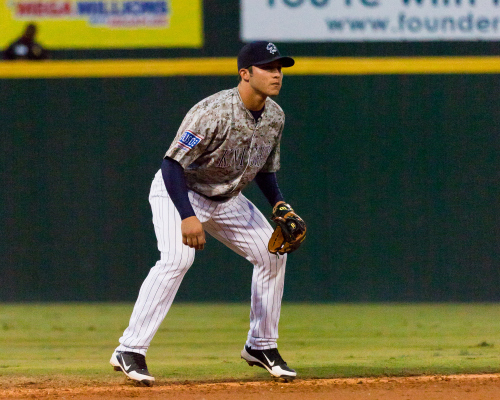
Fun fact: former manager Tommy Thompson said Carlos loves ice cream.

Scattered among those grizzled veterans are a few young up-and-comers like Sanchez, who isn’t even allowed to legally drink for another 15 days.

He signed with the White Sox during May 2009 out of Maracay, Venezuela, as an international free agent. Although he’s the youngest player to reach the highest level of the minors, he didn’t have his first full season of baseball until last year.

For various reasons, Sanchez never played in spring training until 2012. He spent two years in the Dominican Summer League and another at Class A Kannapolis before he made his first appearance in Glendale, Ariz., for spring training.

“It’s a little different getting used to playing every day,” Sanchez said through a translator.

“I created a different routine that’s helped me no matter where I am, where I’m playing, to keep working hard every day.”

Work ethic admirable

That work ethic was part of the reason his managers rave about him.

“He’s what you’re looking for in a young player,” said Knights manager Joel Skinner. “He has a lot of energy, he plays in the middle of the field (shortstop and second base), and he’s a switch-hitter.”

With smooth footwork, soft hands and a strong arm, Sanchez always has been a sterling fielder, according to scouts. He looks up to fellow Venezuelan switch-hitter Omar Vizquel, and his Class A Winston-Salem Dash manager Tommy Thompson compared him to Hall of Famer Roberto Alomar Jr. because of the ease with which fields.

“He makes the normal play and extraordinary play look simple,” Thompson said.

His glove has never been in question, but Sanchez took a big step forward in his first full season of baseball when he showed how complete his overall game is.

Starting the 2012 season in Winston-Salem, he hit .315 with a .374 on-base percentage and earned a spot on the Major League Baseball All-Star Futures team alongside Manny Machado, Jose Fernandez and Jean Segura, all of whom already have made their marks in the majors.

Learning to run

Perhaps the most important thing he worked on in Winston-Salem was base running.

“Last year was actually the first time I really emphasized a lot of working on” base running, he said, “and it paid off.”

In 2011, Sanchez was 8-for-18 on stolen-base attempts, so Thompson worked with him throughout the 2012 season on leads, jumps and deciding when to steal.

The result? Sanchez leveraged his above-average speed into 26 steals – in a more efficient 41 attempts. Even more impressive was that he led the Arizona Fall League that year in steals over Reds farmhand Billy Hamilton, who has stolen 258 bases over the past two seasons.

Just a week after going 1-for-2 with a double and a run in the Futures Game, Sanchez was called up to Class AA Birmingham. After tearing through Birmingham, hitting .370 with a .424 on-base plus slugging percentage, he was called up to Charlotte for a playoff run exactly one month after his first promotion of the season.

“It was fun, and it was important for me to get that experience,” he said. “It was the first playoff I ever had in the United States, and it helped me get that experience for this year. When I came here I had already been here a little before.”

Getting noticed

After his quick rise from Class A to Class AAA in one season, Sanchez was named the White Sox’s third-best prospect by Baseball America. The magazine even has him rated as the best hitter for average and best defensive infielder in the system.

Although he only has a .297 on-base percentage this season, he has 23 steals in 36 attempts. He’s holding his own in a league in which the average pitcher is eight years older.

With White Sox second basemen Gordon Beckham and Jeff Keppinger struggling to a combined .246 average and .262 on-base percentage, Sanchez soon might become the fifth-youngest major leaguer instead of the youngest player in Class AAA. He would be the youngest White Sox player since Jon Garland in 2000.

“I’ve been coaching for 30 years,” said Thompson, “and when you get a guy like him, you want to hang on to him. But he deserves to play at the next level. If he gets called up, he’ll never go back down.”

_

Also check out my back and forth with ASChin about whether or not the Bobcats should trade for DeMarcus Cousins.

Categories: MLB | Leave a comment

When Profiling is Bad

Ken Rosenthal ran an article this morning that implored the Angels to move Magic Mike Trout back to center field, which is a popular idea. Selfishly, I’d love to see the 21-year old superstar back in center field because he would get to cover more ground and provide more value.

But Rosenthal’s logic is a bit flawed.

To start off–although this isn’t my biggest issue with the piece–Rosenthal makes an appeal to tradition saying that the Angels shouldn’t move Trout off center field because the Giants wouldn’t have moved Willie Mays off center. Not only is that a logical fallacy, but the Giants very well may have done just that if they had a similar outfield situation to the Angels.

The real issue here is whether or the Angels want to maximize Trout’s value or the team’s value.

a

Did I mention Mike Trout is really, really good?

As a quick primer, Mike Trout was an exquisite defender last year, posting a 13.3 UZR (runs saved). Peter Bourjos was even better with a 16.3 UZR in 41% as many innings, second best among fielders with at least 200 innings played.

After signing Josh Hamilton and trading Kendrys Morales, the Angels had two open outfield spots: center field and left field. Center field is more demanding, but more offense is expected of corner outfielders, since less players can handle center field.

In a vacuum, Bourjos’ lack of power would profile him as more of a center fielder, and Mike Trout could easily profile as a corner outfielder given his power. But both can handle center field very well.

In Rosenthal’s article, he brings up a good point by an executive about positional value.

As one rival executive explains, a .930 OPS from Trout in center would give the Angels a far greater competitive advantage than a .930 OPS from him in left. Center fielders generally don’t hit as well as left fielders. The average OPS in center this season is .728. The average OPS in left is .765.

While his point in theory is right, it makes no difference in practicality. The center and left field position together is averaging a .747 OPS, and Trout and Bourjos together are averaging a .901 OPS. But it doesn’t actually matter who is in left and who is in center. Either Trout provides a .165 OPS boost in left and Bourjos provides a .099 boost in center, or Trout provides a .202 boost in center and Bourjos gives a .062 boost in left field. The math is the same. There’s no offensive difference.

What this means is offensively, it doesn’t matter what position they play. Mike Scioscia should fill out his lineup card defensively solely based on defensive prowess, since this is the roster he is given. And if we’re operating under the assumption that Bourjos is better defensively, than he should be in center field.

It doesn’t matter who profiles better at what position. It’s too bad for Trout that his WAR is hurt by playing a less valuable position, but the team as a whole will be better off with Trout in left.

There’s been a similar situation on the other coast for the past four year, where the Yankees have actually been ignoring positional profiles. Curtis Granderson and Brett Gardner both played center field in 2009 before Granderson was acquired from Detroit, and the Yankees had left field and center field open for the outfielders.

Between the two, Gardner profiles more as a center fielder, and Granderson’s power allows him to profile as a corner outfielder, but the Yankees were fine with ignoring the profiles and playing Granderson in center with Gardner in left. Here’s the problem: Granderson is not a good center fielder.

Since they Granderson came to New York in 2010, he has a gross -15.8 UZR, while Gardner is sporting a league-high 56.4 UZR. Granderson has more positional value in center field, but he hurts his team’s value since he’s just not a capable fielder and Gardner is the alternative.

When a team has two capable center fielders on their roster, profiling can be a dangerous way to fill out the lineup. The two hitters will perform the same no matter which position they’re playing; defensive positioning should be determined by who is the best defender.

Imagine that.

Categories: MLB | Leave a comment

2013 Baseball Preview

Well, folks, it’s finally here. After months of hard work, research, writing, formatting, editing, blood, sweat, and not that many tears (I swear) the 2013 Baseball Preview has arrived.

First the bad news: this year’s issue is not 105 pages. In fact it shrunk for the first time in my seven years of writing this to 38 pages.

But there’s good news: You get another year of my baseball preview with better content than ever. And it’s 100% free. Unless you really want to pay, then just email me bwweinrib@gmail.com and something can be arranged.

Enjoy!

2013BaseballPreview.pdf (page 1 of 38)

Categories: MLB | 2 Comments

2013 Top 50 MLB Prospects

It’s been a while, folks. A month and a day, actually. Between school work, finishing up my baseball preview, and pledging a fraternity, I haven’t had a ton of time on my hands, but I’m happy to issue my first sneak peak at my 2013 Baseball Preview.

Just like the past two years, I’m offering a look at my scouting reports on baseball’s top 50 prospects a little in advance of the publishing date (within 10 days, be ready). In the actual preview itself, each team will again have scouting reports for their top 10 prospects along with individual grades.

Unfortunately, this year’s preview won’t be quite as big as last year’s. Ain’t nobody got time for 108 pages. Instead, we’re looking more at something between 32 and 40 pages. For now, enjoy an early look at baseball’s future stars.

Notes:

  • Two players (Oscar Taveras and Xander Bogaerts) jumped from the 40s to the top 5.
  • Only 26 players return from last year’s top 50 prospects list.
  • 14 players graduated to the majors.
  • 10 players fell off the top 50 list from last year.
  • Of the 24 new players to the list, 10 were selected in the 2012 draft.
  • 13 of the top prospects were taken in the first round of the 2011 draft, the most among any draft.
  • Billy Hamilton (2nd round), Jonathan Singleton (8th), Mason Williams (4th), and Austin Hedges (2nd) were the only players drafted outside the first round, excluding the 12 players signed in international free agency.

Positional Breakdown

  • 4 Catchers
  • 1 First Baseman
  • 1 Second Baseman
  • 3 Third Basemen
  • 7 Shortstops
  • 11 Center Fielders
  • 5 Right Fielders
  • 17 Right-Handed Pitchers
  • 1 Left-Handed Pitchers

1. Jurickson Profar

SS Rangers mlb_profar_jurickson_65
H/W: 5’11” 165 2012 Ranking: 9 Age: 19 B/T: B/R
Profar shows all the tools (home run power may come soon) with an outstanding approach. With such a complete game, he’s the top prospect in baseball.

2. Wil Myers

RF Rays mlb_myers_wil_65
H/W: 6’3″ 190 2012 Ranking: 13 Age: 22 B/T: R/R
He has a great bat with plus plus power. There’s really nothing to dislike unless you want to be picky about his strikeouts. Myers will be on the Evan Longoria-esque delayed call-up this year.

3. Oscar Taveras

RF Cardinals mlb_tavares_oscar_65
H/W: 6’2″ 180 2012 Ranking: 41 Age: 20 B/T: L/L
His swing may look a little funky, and he tends to be overly aggressive at the plate, but Taveras can absolutely rake. Hit hit, power, and fielding tools are all well above plus.

4. Dylan Bundy

RHP Orioles mlb_bundy_dylan_65
H/W: 6’1″ 195 2012 Ranking: 8 Age: 20 B/T: B/R
Bundy has exceptional polish, especially a twenty-year old. The man has four plus pitches how that he’s re-added his cutter to his repertoire; MLB’s best pitching prospect.

5. Xander Bogaerts

SS Red Sox mlb_bogaerts_xander_65
H/W: 6’3″ 175 2012 Ranking: 44 Age: 20 B/T: R/R
He can absolutely rakes with 30+ home run power when he’s fully developed. Bogaerts reached AA at 19 and has far less questions about if he can handle shortstop, at least for the time being.

6. Gerrit Cole

RHP Pirates mlb_cole_gerrit_65
H/W: 6’4″ 215 2012 Ranking: 5 Age: 22 B/T: R/R
Cole’s fastball is a doozy and reaches as high as 102, although it can be flat and lacking command. That, with his exceptional changeup and slider make him a true ace.

7. Jose Fernandez

RHP Marlins mlb_fernandez_jose_65
H/W: 6’2″ 220 2012 Ranking: NR Age: 20 B/T: R/R
Having four plus pitches (fastball, curveball, changeup, and slider), along with great peripheral numbers makes Fernandez’s future tantalizing. At just 20, he has an extremely high ceiling.

8. Jameson Taillon

RHP Pirates mlb_taillon_jameson_65
H/W: 6’6″ 225 2012 Ranking: 11 Age: 21 B/T: R/R
Taillon has tremendous stuff with inconsistencies you’d expect from a 21-year old. Very reminiscent of Gerrit Cole in his final year at UCLA; another ace.

9. Byron Buxton

CF Twins mlb_buxton_byron_65
H/W: 6’1″ 188 2012 Ranking: IE Age: 19 B/T: R/R
Arguably the top talent in the 2012 draft, Buxton is crazy athletic with elite speed, a huge arm, big bat and future power. Give him time, Buxton is the complete package.

10. Carlos Correa

SS Astros mlb_correa_carlos_65
H/W: 6’4″ 190 2012 Ranking: IE Age: 18 B/T: R/R
The actual top pick in 2012 draft, Correa is a strong defender despite his 6’4” frame. He may have to switch to third if he beefs up too much, but he’ll hit for average and big power.

11. Zack Wheeler

RHP Mets mlb_wheeler_zack_65
H/W: 6’3″ 180 2012 Ranking: 27 Age: 22 B/T: R/R
Wheeler has great velocity and a plus curveball to go with a solid slider and changeup. Top-of-the-rotation future, but the Mets have not pushed him very quickly so far.

12. Christian Yelich

CF Marlins mlb_yelich_christian_65
H/W: 6’4″ 189 2012 Ranking: 34 Age: 21 B/T: L/R
All five of his tools are above-average, and he should be able stick in center field, despite switching from first base. He’s going to hit for a very good average; if power develops, he’ll be a star.

13. Miguel Sano

3B Twins mlb_sano_miguel_65
H/W: 6’2″ 245 2012 Ranking: 19 Age: 19 B/T: R/R
He’s patient, has a cannon arm, and has the most raw power in the entire minors. Sano strikes out too much (contact has been an issue), and his frame and footwork may move him to first.

14. Trevor Bauer

RHP Indians mlb_bauer_trevor_65
H/W: 6’1″ 185 2012 Ranking: 10 Age: 22 B/T: R/R
Bauer is very smart with polarizing attitude that helped him fall out of favor in Arizona. Regardless, he has number one starter stuff, and his command needs polish. He’ll be just fine.

15. Mike Zunino

C Mariners mlb_zunino_mike_65
H/W: 6’2″ 220 2012 Ranking: IE Age: 21 B/T: R/R
Zunino is great all-around with plus bat, intriguing power, and strong defense. As far as catchers go, he’s the complete package and nearly ready to help out at the major league level.

16. Travis d’Arnaud

C Mets mlb_darnaud_travis_65
H/W: 6’2″ 195 2012 Ranking: 16 Age: 23 B/T: R/R
A solid defender with a strong arm. The man has plus raw power and a nice bat–the only thing to worry about are injuries. He’s had more than 280 plate appearances in two of his five seasons.

17. Taijuan Walker

RHP Mariners mlb_walker_taijuan_65
H/W: 6’4″ 195 2012 Ranking: 21 Age: 20 B/T: R/R
Walker has an athletic frame and his numbers are deceptively bad since he reached AA at the age of 20. He has a very high ceiling thanks to a plus fastball and secondary offerings.

18. Shelby Miller

RHP Cardinals mlb_miller_shelby_65
H/W: 6’3″ 195 2012 Ranking: 6 Age: 22 B/T: R/R
Had a bit of an off-year, but his fastball still reaches the upper 90s to go with a plus curveball. He can be homer prone, but Miller is ready to pitch in the majors as a starter now.

19. Julio Teheran

RHP Braves mlb_teheran_julio_65
H/W: 6’2″ 175 2012 Ranking: 4 Age: 22 B/T: R/R
Another guy who had a bad year but reached the majors at a young age. Teheran features a plus fastball, and changeup, although his command and curveball could improve.

20. Tyler Skaggs

LHP D-Backs mlb_skaggs_tyler_65
H/W: 6’4″ 195 2012 Ranking: 18 Age: 21 B/T: L/L
Skaggs has an above-average fastball, a plus curveball, and a potentially plus changeup. His floor is relatively high since he’s already been able to knock out lefties and righties.

21. Addison Russell

SS Athletics mlb_russell_addison_65
H/W: 6’0″ 185 2012 Ranking: IE Age: 19 B/T: R/R
A hidden gem of the 2012 draft, Russell is a potential five-tool player with real star power. He has shown shaky footwork before, but he’s athletic enough to stick at shortstop.

22. George Springer

CF Astros mlb_springer_george_65
H/W: 6’4″ 2405 2012 Ranking: 40 Age: 23 B/T: R/R
People knock him because of his age and strikeout issues, but that Astros have been slow to promote him is not his fault. He’s an absolute five-tool prospect, although he may only hit .270.

23. Archie Bradley

RHP D-Backs mlb_bradley_archie_65
H/W: 6’4″ 225 2012 Ranking: 15 Age: 20 B/T: R/R
Bradley has a nasty fastball-curveball combo and great size and athleticism. There’s no doubting his ace upside despite, but he’s got a ways to go and command issues to iron out.

24. Billy Hamilton

CF Reds mlb_hamilton_billy_65
H/W: 6’1″ 160 2012 Ranking: 49 Age: 22 B/T: R/R
Hamilton is absurdly speedy (155 steals last year) and great on-base skills thanks to plus bat speed. He’s been moved off shortstop to center field, where he can really show off his legs.

25. Francisco Lindor

SS Indians mlb_lindor_francisco_65
H/W: 5’11” 175 2012 Ranking: 50 Age: 19 B/T: R/R
Lindor is quietly an outstanding defender with plus speed and on-base skills. He is very mature for his age (19), but one hopes he will develop more power by the time he hits the show.

26. Anthony Rendon

3B Nationals mlb_rendon_anthony_65
H/W: 5’11” 170 2012 Ranking: 23 Age: 22 B/T: R/R
Rendon has been hampered by ankle injuries (not good news if the Nats want him at second), but he  rakes when he’s healthy. He’s got great instincts and discipline but just solid power.

27. Javier Baez

SS Cubs mlb_baez_javier_65
H/W: 6’1″ 205 2012 Ranking: NR Age: 20 B/T: R/R
Baez has proved to be a surprisingly strong defender considering his muscly frame. He’s an aggressive hitter with plus bat speed good raw power, and playable speed on the bases.

28. Lucas Giolito

RHP Nationals mlb_giolito_lucas_65
H/W: 6’6″ 225 2012 Ranking: IE Age: 18 B/T: R/R
Giolito was nearly first-ever high school pitcher taken first overall before he hurt his elbow. Still, his raw stuff is fantastic with triple-digit heat and a plus plus curveball. Not worried about his future health.

29. Carlos Martinez

RHP Cardinals mlb_martinez_carlos_65
H/W: 6′ 165 2012 Ranking: 28 Age: 21 B/T: R/R
Despite his small frame, Martinez touches 100 mph regularly. His plus fastball actually draws a good amount of grounders, although his command just okay at the moment.

30. Jonathan Singleton

1B Astros mlb_singleton_jonathan_65
H/W: 6’2″ 215 2012 Ranking: 39 Age: 21 B/T: L/L
Singleton is suspended 50 games for marijuana use, but that doesn’t hurt his value. His hit tool is great, and power should come soon, although he needs more patience. His plus arm is wasted at first base.

31. Nick Castellanos

3B Tigers mlb_castellanos_nick_65
H/W: 6’4″ 210 2012 Ranking: 42 Age: 20 B/T: R/R
Castellanos hits very well for average and home run power should develop soon. He does need more patience at the plate. Detroit is playing him some in right field so Miguel Cabrera can boot more balls at third, which makes little sense to me.

32. Kevin Gausman

RHP Orioles mlb_gausman_kevin_65
H/W: 6’4″ 185 2012 Ranking: IE Age: 22 B/T: R/R
Gausman has high potential with a plus fastball and changeup. Assuming his breaking ball develops more, he’ll be another ace Baltimore can pair with Dylan Bundy.

33. Jackie Bradley Jr.

CF Red Sox mlb_bradley_jackie_65
H/W: 5’10” 180 2012 Ranking: NR Age: 22 B/T: L/R
An elite defender with remarkable instincts. Plays above his hit tool, which is good to start with, and above-average speed. He wields little power now, which would be the key to stardom.

34. Kyle Zimmer

RHP Royals mlb_zimmer_kyle_65
H/W: 6’3″ 215 2012 Ranking: IE Age: 21 B/T: R/R
One of the best 2012 college arms. Zimmer has a projectable frame, good command, and great stuff. His velocity uptick into the upper-90s really helped his draft stock, value.

35. Matt Barnes

RHP Red Sox mlb_barnes_matt_65
H/W: 6’2″ 205 2012 Ranking: NR Age: 22 B/T: R/R
His fastball works in the upper-90s with nice movement. Barnes wields a plus curve and control with a #2 starter ceiling. He hasn’t been tested at all above high-A, where he dominated.

36. Gregory Polanco

CF Pirates mlb_polanco_gregory_65
H/W: 6’4″ 170 2012 Ranking: NR Age: 21 B/T: L/L
A plus defender with plus speed and power. Polanco’s swing can get a bitlong, but he surprisingly doesn’t strikeout much. He’s always been toolsy, but didn’t start producing until now–boom or bust?

37. Aaron Sanchez

RHP Blue Jays mlb_sanchez_aaron_65
H/W: 6’4″ 190 2012 Ranking: NR Age: 20 B/T: R/R
Sanchez has three plus pitches including some upper-90s heat. His overpowering stuff covers up poor control, although he has plenty of time to correct that. Big-time upside.

38. Mason Williams

CF Yankees mlb_williams_mason_65
H/W: 6′ 150 2012 Ranking: NR Age: 21 B/T: L/R
Williams is an elite defender, with plus speed and an improving bat. He has a great approach on both sides of the ball, and may develop more power along the way.

39. Gary Sanchez

C Yankees mlb_sanchez_gary_65
H/W: 6’2″ 220 2012 Ranking: NR Age: 20 B/T: R/R
Sanchez is an aggressive power hitter with a plus bat. His bulky frame leads to long transitions, which he makes up for with a cannon of an arm. He should still stick behind the plate.

40. Taylor Guerrieri

RHP Rays mlb_guerrieri_taylor_65
H/W: 6’3″ 195 2012 Ranking: NR Age: 20 B/T: L/R
Guerrieri has been heavily limited by the Rays, but he’s a potential ace with plus fastball and curveball. The youngster has impeccable control but has only reached low-A.

41. Albert Almora

CF Cubs mlb_almora_albert_65
H/W: 6’1″ 170 2012 Ranking: IE Age: 18 B/T: R/R
Almora has above-average tools across the board; he just needs to refine his plate discipline and he’ll be on track. The man’s extremely polished for his young age (18).

42. David Dahl

CF Rockies mlb_dahl_david_65
H/W: 6’2″ 185 2012 Ranking: IE Age: 18 B/T: L/R
Another pleasant surprise out of the 2012 draft, Dahl is extremely athletic with five-tool potential. He’s not nearly as raw as once thought–a complete hitter with a chance to stick in CF as he fills out.

43. Alen Hanson

SS Pirates mlb_hanson_alen_65
H/W: 5’11” 152 2012 Ranking: NR Age: 20 B/T: B/R
Hanson shows great defense and speed tools, but hasn’t used them well yet (lots of errors and times caught stealing). He’s a legit switch-hitter who will hit for a high average and some power.

44. Bubba Starling

CF Royals mlb_starling_bubba_65
H/W: 6’4″ 180 2012 Ranking: 14 Age: 20 B/T: R/R
Starling is an elite athlete with high ceiling who hasn’t played up to his potential. He has plus power and bat speed, but his swing has some mechanical issues that lead to big strikeout totals.

45. Jorge Soler

RF Cubs mlb_soler_jorge_65
H/W: 6’3″ 205 2012 Ranking: IE Age: 20 B/T: R/R
This guy has enormous upside with massive power, a big arm, and impressive speed for his frame. The key for him will be adjusting to off-speeds and narrowing his pitch selection.

46. Austin Hedges

C Padres mlb_hedges_austin_65
H/W: 6’1″ 190 2012 Ranking: NR Age: 20 B/T: R/R
Hedges is an outstanding defender with surprising power. He could stand to take a few more pitches. He’s unlikely to fail, but also doesn’t ooze upside like the guy two spots below him.

47. Aaron Hicks

CF Twins mlb_hicks_aaron_65
H/W: 6’2″ 185 2012 Ranking: NR Age: 23 B/T: B/R
All five tools are finally setting in; Hicks is finally fulfilling his elite promise. At worst, he’s a plus defender with great speed and plate discipline. He always seems to start slowly.

48. Rymer Liriano

RF Padres mlb_liriano_rymer_65
H/W: 6′ 211 2012 Ranking: 32 Age: 21 B/T: R/R
The definition of boom or bust, although I’m a big fan. He’s got plus speed, raw power, and bat speed but poor pitch recognition. Defensively, he’s angy with cannon arm. You have to love the tools.

49. Delino DeShields Jr.

2B Astros mlb_deshields_delino_65
H/W: 5’9″ 188 2012 Ranking: NR Age: 20 B/T: R/R
DeShields Jr. is an elite athlete with insane speed, only overlooked because of Billy Hamilton’s ridiculousness. His bat is very much improved, and he can play either second base or center field.

50. Courtney Hawkins

RF White Sox mlb_hawkins_courtney_65
H/W: 6’3″ 220 2012 Ranking: IE Age: 19 B/T: R/R
I’m a big fan, and I don’t get why Hawkins doesn’t get more hype. He’s a tremendous athlete with plus power and arm strength to go with good speed. Improve plate discipline is the one big issue.

_

Categories: MLB | 2 Comments

Winter Meetings Day Three

Today was my third day at the MLB Winter Meetings. It’s been a few days of a lot of transactions and a lot of news. Check out my recaps of the first two days. Without further ado, here are the rumblings I heard from Day Three at Opryland. Remember, everything below is from what the coaches and other sources told me.

2:06 PM CT – Jim Leyland, Tigers manager:

Leyland said that it would be tough to run a closer-by-committee for a full season, but it did work in the postseason for the Tigers. And since it worked in the postseason, Leyland said he’d be willing to try it out in the regular season. Ultimately, he’s willing to make whatever moves he has to move to win the game. At this point, the team is unlikely to re-sign Jose Valverde, especially as a closer. Leyeland did mention that the team has been put in a great place to succeed with owner Mitch Ilitch’s financial flexibility.

Leyland was asked about young outfielders Nick Castellanos and Avisail Garcia and potential playing time in the majors. He didn’t give any specific details on either player, but he did explain the process of how they will decide. He said first the team will decide if they’re ready to play in the majors, then if they’re ready to play every day or in a platoon split. Then, the team has to consider whether it’s more beneficial for the player to be playing every other day or get 500 at bats in the minors. He said the biggest key for Garcia will be how well he responds to adversity early on in the year.

One final note is that third base coach Gene Lamont will be moved to the bench coach for two reasons. For one, his knee has been acting up lately, and standing up for a whole season was going to be a bit of a help concern. Secondly, Lamont now really becomes Leyland’s second hand man, as he will spend the entire game at next to the manager.

2:19 – Clint Hurdle, Pirates manager:

Hurdle had a lot to say about James McDonald. For starters, he said that if McDonald pitched in the second half the way he did in the first half, he could be a lock down number three starter. I thought it was interesting that Hurdle chose to put his ceiling at just a number three starter. This season, Hurdle said, will be a fresh start for McDonald, who shouldn’t have to worry about if he is a first-half or second-half pitcher (he won’t half to worry about being a second half pitcher).

Last season, Hurdle thought McDonald made a lot of small improvements, but tried to bite off a bit more than he could chew. He really needs to work on three main things: throwing first pitch strikes, getting batters to chase and miss pitches, and not get too caught up in all four pitches. Hurdle said that McDonald sometimes forces all of his pitches, even when he only needs three to really pitch fine.

Hurdle was asked what he might do about his bullpen in Joel Hanrahan ends up traded, and he laughed at the notion of needing a proven closer. He said that most closers start out in a different role and end up in the ninth inning. More importantly, he’d rather have big arms that he can use.

The manager was asked a lot about his outfielders and reiterated that Andrew McCutchen was one of the best in the league. He wasn’t perfect in the second half, but of course, nobody has an OPS of .900 in every month of the season. He also said he was excited for Travis Snider, Starling Marte, and Gaby Sanchez to have a full season with the Pirates. He said that Snider was just starting to get in the groove before he had an injury. As for Sanchez, he said that the team saw him as an every day player. Hurdle also said that the team will soon discuss how much more Winter Ball Marte needs to play.

Hurdle mentioned that the team was looking to build around continuity, and that Russell Martin would be a great fit. He said the team needs to perform much better in the second half of the season. Additionally, he said that he wouldn’t stop players from competing in the World Baseball Classic, since he isn’t the person to dictate that. He did say, though, that he just wanted to hear why each player wanted to compete in the tournament.

Lastly, Hurdle said that he hadn’t talked with hitting coach Jay Bell about how to improve Pedro Alvarez’s ability to hit for average. However, he did say that he expected a boost in hitting to come from Alvarez soon, as 2013 would be his first full season with Pittsburgh. Hurdle also noted that Alvarez knows he can hit better for average, but that the team can take an on-base risk with a player that can hit so well for power.

2:40 – Yankees Source:

According to a source with the Yankees, Brian Cashman was very upset that the Russell Martin ended up signing with Pittsburgh. The source also said that Cashman thought the team would miss Martin a lot and that the team did not prioritize Martin highly enough.

2:42 – Terry Francona, Indians manager:

Tito said that if the Indians add another power bat, the team is going to run a lot less. However, if the team does not have the same power from the middle of the lineup, he will let the faster runners free.

Obviously, Francona got a lot of questions about the Red Sox. He said that Cleveland is far different from Boston, because in Boston it was ‘Win or go home.’ However, things are far more lax in Cleveland; the team is a lot younger, but they will still contend. He also said that he’s sad the way things ended in Boston, but that doesn’t change the great times he had with the team. Additionally, he said that he thought the 2008 team was the best team–Josh Beckett just wasn’t entirely healthy and the team ran into a buzzsaw in the Tampa Bay Rays. Jokingly, he did say that Boston’s biggest weakness was their manager.

Tito noted that building relationships with his players is key to a strong season, so he is going out of his way to meet as many of his new players as possible. He hasn’t met all of them yet, but he did say that the World Baseball Classic taking away some of his players will hurt the chemistry between his new staff and the team.

The manager also noted that he really did miss baseball last year, especially when spring training rolled around. As for his role, he said that his main job was to get the best out of his players. However, over a full season, he thought weaknesses in talent would show.

The last thing Tito said was that the team would look a lot better with Carlos Carrasco and Zach McAllister back healthy. The team needs all the pitching they can get.

2:57 – Mike Scioscia, Angels manager:

Most of the questions for Scioscia had to do with his outfielders. Scioscia announced that Mark Trumbo would be playing left field and Peter Bourjos would be playing left field. Trumbo only played left field last year because Torii Hunter was better suited for right field. He also noted that the roster right now is far from complete, so any other lineup situations would be purely hypothetical.

For now, Scioscia did say that there would be a rotation of outfielders playing the DH spot. Namely, those players would be Kendrys Morales, Vernon Wells, and the starting outfielders Bourjos, Mike Trout, and Trumbo. Scioscia sounded optimistic about Wells, saying that injuries have slowed him down the past two years and that his talent is far above his production level lately.

3:04 – Eric Wedge, Mariners manager:

One of the bigger things Wedge emphasized with his younger players was adding strength. He mentioned that Justin Smoak, Jesus Montero, and even Hisashi Iwakuma needed to add a bit more strength. He said that Smoak needed to get stronger while staying lean, and that his ability to hit breaking balls and to all field would be key to continue from the last five weeks of 2011. As for Montero, Wedge said that he wouldn’t be catching every day, but that Montero still needed to improve his technique and flexibility, along with his strength. Iwakuma really needed to get more confidence and acclimated to the American style of baseball, plus a little more arm strength.

With Montero not playing every day, Wedge noted that the team was looking to add another catcher.

For his two final notes, Wedge said that his DH would likely be a rotation of players, giving them a day off in the field. His philosophy is to use a rotation of players, unless the team has a thunderous bat, which the Mariners do not. Also, he said the Mariners moving the fences in would help out the team realistically and psychologically. Wedge said the ballpark would be fair now.

3:16 – Mike Redmond, Marlins manager:

Mike Redmond talked a lot about changing the culture in Miami, saying that the team would focus on the small things like execution and hustle. He also noted that the team would need a laser-like focus starting in Spring Training, and if they focused purely on baseball, the team would be fine.

As for his style of managing, Redmond said that he was aggressive in the minor leagues, and he would be aggressive in the majors, unless things changed. He said that he would be very flexible as a manger and wanted to study the players as much as possible, since information in the majors leagues is very deep, especially compared to the minor leagues.

Redmond didn’t have many exact things to say about his lineup, saying that he had about fifty different lineup scenarios, but he did say that he would have Giancarlo Stanton hitting fourth and newly acquired Adeiny Hechavarria hitting eighth.

Redmond did also say that he loved energetic players; he didn’t get how players couldn’t get excited playing a three hour game. His mantra is that he always wants to manage to win the game. He just likes to get fired up out there.

3:39 – Bud Black, Padres manager:

Black mentioned that last year was tough on the pitching staff because of several injuries. However, with Jason Marquis’ return and the potential addition of another pitcher on a one-year deal, the pitching staff would be better. The key for this team would be health.

Offensively, Black thought that this was one of the best teams to hit in San Diego in a very long time, and the same starting lineup will be around next year. The last three months were great for this team, and they should carry over into next season.

Categories: MLB | Leave a comment

Winter Meetings Day Two

I was lucky enough to get a press pass for the MLB Winter Meetings this week, and it’s really been a great experience. I recapped Monday’s action in a post yesterday, and here’s the happenings from today.

3:37 CT – John Farrell, Red Sox Manager

A disproportionate amount of the questions aimed at Farrell had to do with the Blue Jays, asking things along the lines of if he coached any differently down the stretch with Toronto, how he felt about the Blue Jays making moves right after he left, if he thought about returning to Boston last season, etc. Farrell had the same basic answer for all the questions: he was fully committed to the Blue Jays and now he is fully committed to the Red Sox. He did have an interesting quote, where he said that he thought every job in the majors was a training job, and that managers aren’t really tied down to one organization.

As far as players appearing in the World Baseball Classic, Farrell said that the team has not been informed about which players will be participating in the World Baseball Classic, although he did allude to the fact that he expected both David Ortiz and Dustin Pedroia to play.

In terms of free agent players, Farrell said the team is looking for strong reputations as far as being team players, something he saw in recently-signed Mike Napoli. As far as free agent pitchers, he said the team is not tied down to a certain style of pitcher, they’re more concerned about performance, the stamina to go late into games, and health.

He also noted that the team’s right fielder may not be your prototypical right fielder, since the team is looking for strong defense, another center fielder, as opposed to a major power bat. Additionally, Farrell said that the team was looking for a lefty bat, although they weren’t locked into anything. Fittingly, the Red Sox signed Shane Victorino exactly one hour later to play right field.

Talking about infielders, Farrell said that the team would not by playing Jarrod Saltalamacchia at first base. He also thought that Will Middlebrooks can eventually develop into a middle-of-the-order bat, but he’ll be in the back half of the lineup for now.

Farrell also talked for a while about pitchers. He said that John Lackey got back into the swing of things at instructionals last fall and is expected to start 28 to 30 games this season. If he were to convert any reliever to become a starter, Farrell said that Franklin Morales, not Alfredo Aceves, had been discussed internally as a potential starter. Aceves is likely to be used as a late inning reliever or possibly a long man, said the coach. Junichi Tazawa and Mark Melancon are expected to manage the later innings, and Andrew Bailey will remain the closer. Daniel Bard has a longer way to go, said Farrell. Farrell has faith that Bailey will return to form, saying that last year wasn’t the real Andrew Bailey, since he was injured and trying to rush to catch up.

Lastly, Farrell discussed two young pitchers, Rubby de la Rosa and Allen Webster. He said both will start the season as starting pitchers, since that’s where the team sees both pitchers’ futures. Each pitcher’s role with the major league team has yet to be determined.

3:58 – Kirk Gibson, Diamondbacks manager

Just as John Farrell got an overwhelming number of questions about the Blue Jays, Gibson received a bounteous supply of Justin Upton trade questions. He said that he doubts the team will get an offer they can’t refuse on Upton and that the Diamondbacks will not contend without him. It’s unclear, though, if those are just Gibson’s wishes or GM Kevin Towers’ wishes. Gibson did laugh off his final Upton question, saying that there are plenty of other players on his roster that have been rumored to be on the trading block for several years.

When asked about his young pitchers, Gibson didn’t really have one favorite between Patrick Corbin, Trevor Bauer, and Tyler Skaggs. He said the team is happy with all three’s progression and actually asked all of the reporters which pitcher they thought was the most polished.

Gibson also said that newly acquired Heath Bell will start the year pitching in the seventh inning. He called Bell “iron-armed,” saying that he though Bell would benefit from returning to the West, where he had success with the Padres. He said that as long as their starters could get the team through six innings, the team would be in good shape with J.J. Putz, David Hernandez, Brad Ziegler, and Bell.

4:09 – Mike Matheny, Cardinals manager

Matheny looked back at his first season as a manager, saying that that his “philosophy going into (the season) was to not get in the players’ way.” He’s learning more and more about managing, which is the nature of the job. He thought the season went well, but it could have been a lot better. After all, as he said, building a team is about building championships.

He did also mention that free agent decisions will likely be made sooner rather than later. Now that he is in his second year of managing, he said that GM John Mozeliak comes to him more often to speak about personnel decisions.

Matheny said that the back spots in the rotation along with the starting second base jobs are very much up for grabs. As for whether Kolten Wong has a chance at winning the spot, Matheny said he hadn’t seen enough of him in person, along with other prospects Oscar Taveras and Carlos Martinez. That trio should have a chance to get a lot more playing time this spring training because of the World Baseball Classic, whether that be with their own country or replacing Cardinals that are off playing in the WBC.

4:23 – Ron Gardenhire – Twins manager

Gardenhire opened up this interview session by saying that the reason the Twins played so poorly last season was because the couldn’t do the fundamentals: pitching, catching, and not making simple mistakes like walking a lot of batters. One of the bigger problems was defense, which wasn’t helped by the departure of Denard Span.

On the subject of pitching, Gardenhire tabbed Glen Perkins as the closer, saying he hoped he’d get to use Perkins in that late-inning role 50-60 times. He also said that he didn’t have an exact plan for Kyle Gibson, who is coming off Tommy John surgery, although team officials will sit down and discuss that soon, probably including some sort of inning limit.

Gardy was asked whether he was expecting any big improvements, and he said there’s never any assurances in baseball about roster improvements, but that GM Terry Ryan is working to improve the organization as a whole. He even said he wasn’t assured that he will coach again next year, although he is hoping for an extension and hoping to end his career with the Twins.

One of the more interesting notes Gardenhire shared was that the club was looking to collect more hard-throwing pitchers like Alex Meyer, recently acquired for Span. This is a big change because the Twins have historically collected softer-throwing pitchers with more of an emphasis on control and command.

Finally, the manager did add that you can’t stop players from playing in the World Baseball Classic because it’s important for them to represent their countries. Joe Mauer is one of two players to be named to the US team so far.

4:44 – Joe Girardi, Yankees manager

Unsurprisingly, most of the questions Girardi got had to do with A-Rod and his hip injury. Girardi said that the injury is especially concerning because this injury is to his left hip, and he’s already had work done on his right hip. The team’s budget, however will not change because of Rodriguez’ surgery (which should keep him out until at least May, perhaps into June), so don’t expect any extravagant spending on infielders. Eric Chavez remains centrally on the team’s free agent radar.

Categories: MLB | Leave a comment

Blog at WordPress.com.